Universal Data Access Components History
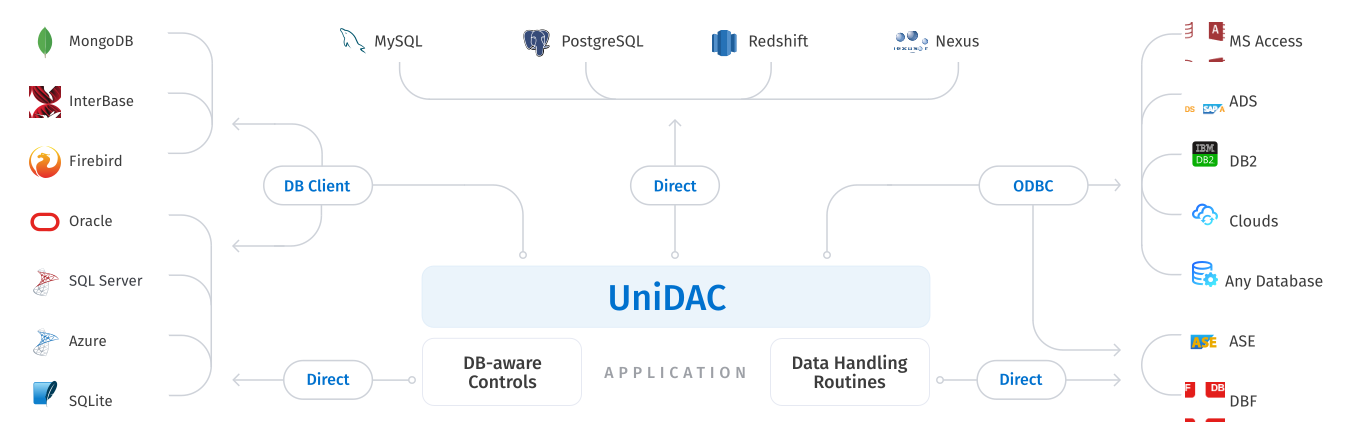
This page lists the functionality added in each version of Universal Data Access Components. To view the full changelog including bug fixes, consult the UniDAC revision history.

23-Nov-11 New Features in UniDAC 4.1:

  • Update 2 for RAD Studio XE2, Delphi XE2, and C++Builder XE2 is now required
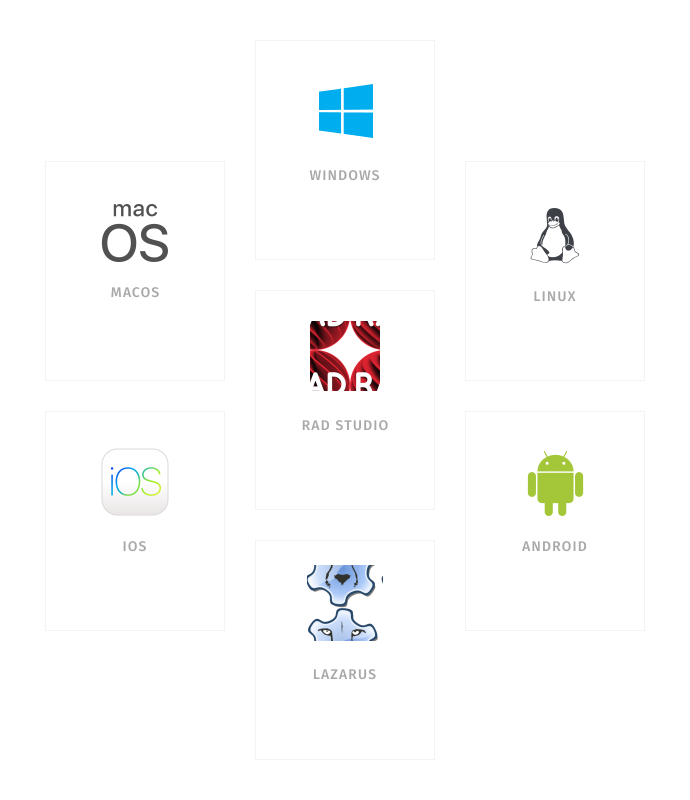
  • Mac OS X and iOS in RAD Studio XE2 is supported
  • FireMonkey support is improved
  • Lazarus 0.9.30.2 and Free Pascal 2.4.4 are supported
  • Mac OS X in Lazarus is supported
  • Linux x64 in Lazarus is supported
  • FreeBSD in Lazarus is supported

Oracle data provider

  • Oracle 11 Express Edition is supported
  • Support for the NonBlocking option is added
  • The QueryResultOnly option is added to TOraChangeNotification

PostgreSQL data provider

  • PostgreSQL 9.1 is supported

SQLite data provider

  • DateFormat and TimedFormat specific options are added in the SQLite data provider

NexusDB data provider

  • Support of NexusDB 3.09 is added

15-Sep-11 New Features in UniDAC 4.00:

  • Embarcadero RAD Studio XE2 is supported
  • Application development for 64-bit Windows is supported
  • FireMonkey application development platform is supported
  • Support of master/detail relationship for TVirtualTable is added
  • OnProgress event in TVirtualTable is added
  • TDADataSetOptions.SetEmptyStrToNull property that allows inserting NULL value instead of empty string is added

MS Access data provider

  • Exclusive access to databases in MSAccess provider is added

Adaptive Server Enterprise data provider

  • Ability to set ApplicationName in the ASE provider is added
  • The AnsiNull option in the ASE provider is added

28-Jan-11 New Features in UniDAC 3.70

  • Lazarus 0.9.30 and FPC 2.4.2 is supported
  • Delphi XE and C++Builder XE Starter Edition are supported
  • New DBF provider is added

Oracle data provider

  • Oracle 9, Oracle 10, and Oracle 11 authentication in the Direct mode is supported
  • Case sensitive login and password in the Direct mode is supported
  • Unicode login and password in the Direct mode is supported
  • Client Identifier in the Direct mode is supported
  • Support of BLOB, CLOB, and NCLOB data types in TUniLoader is improved

PostgreSQL data provider

  • Application Name connection option is supported
  • Payload parameter for PostgreSQL notification is supported

SQL Server data provider

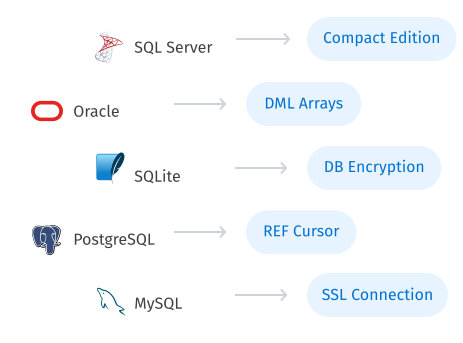
  • Support for SQL Server Compact Edition 4.0 is added

SQLite data provider

  • User-defined function for SQLite provider is supported
  • Default UniNoCase collation for SQLite provider is added (the DefaultCollations specific option)
  • Interface user-defined collation registration for SQLite provider is improved
  • SQLite source version is fixed (missing .inc file is added)

Adaptive Server Enterprise data provider

  • Support for the AnsiNull option is added

26-Jan-11 New Features in UniDAC 3.60

  • NexusDB provider
  • PostgreSQL 9.0 supported
  • Improved performance in the PostgreSQL provider
  • Encryption support in the SQLite provider
  • Support for connection with using Service Name in the Direct mode in the Oracle provider
  • Support for ASCII databases in the SQLite provider (the ASCIIDataBase specific option)

13-Sep-10 New Features in UniDAC 3.50

  • Embarcadero RAD Studio XE suppored
  • TUniAlerter component
  • Collation and UTF sorting support in the SQLite provider
  • Support for dbMonitor 3
  • Support for extended SQL for MS Access (set the ExtendedAnsiSQL specific option to 1)
  • Support of ONLY lexeme in the FROM statement for PostgreSQL
  • Ability to lock records in the CachedUpdate mode
  • Ability to use Access system database added
  • Ability to send call stack information to the dbMonitor component
  • Now setting the SetFieldsReadOnly option to False makes all fields not readonly

10-Sep-09 New Features in UniDAC 3.00

  • Embarcadero RAD Studio 2010 suppored
  • DB2 support added
  • Microsoft Access support added
  • Sybase Advantage Database Server support added
  • Sybase Adaptive Server Enterprise support added
  • ODBC provider added

27-May-09 New Features in UniDAC 2.70

  • SQLite support added

02-Apr-09 New Features in UniDAC 2.50

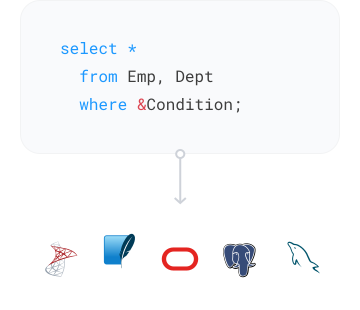
  • Unified SQL support

    Unified SQL is a language extension that has different constructions and allows to write truly database-independent SQL code. Unified SQL includes:

    • Macro - in Unified SQL macros can evaluate to a different value depending on the provider used by the TUniConnection component.
    • IF directive - for the purpose of extra flexibility Unified SQL supports conditional inclusion of SQL code into resulting statements using {if} directive. This allows to set different SQL for different DBMS.
    • SQL Function - introduce standard for calling common SQL functions. In run time function is transformed either to the corresponding native function, or to an equivalent expression.
    • Literal - provides universal syntax for date, time, and timestamp literals.
  • TUniLoader component

    serves for fast loading of data to the database. For each type of database server TUniLoader uses its specific interfaces for loading with maximum speed. For example, Oracle Direct Path Load interface is used for Oracle.

  • TUniDump component

    serves to store data from tables or editable views as a script and to restore data from a received script.

  • TUniConnection.AssignConnect method

    shares physical connection between several TUniConnection components

  • Free Pascal under Linux supported
  • Added NoPreconnect property to TUniScript for executing CONNECT and CREATE DATABASE commands
  • DMLRefresh supported in the PostgreSQL provider

09-Dec-08 New Features in UniDAC 2.00

  • PostgreSQL support added

23-Oct-08 New Features in UniDAC 1.20

  • Delphi 2009 and C++Builder 2009 supported
  • Extended Unicode support for Delphi 2007 added (special Unicode build)
  • Free Pascal 2.2 supported
  • Powerful design-time editors implemented in Lazarus
  • Completed with more comprehensive structured Help

23-Apr-08 First release of UniDAC 1.00

Universal Data Access Components