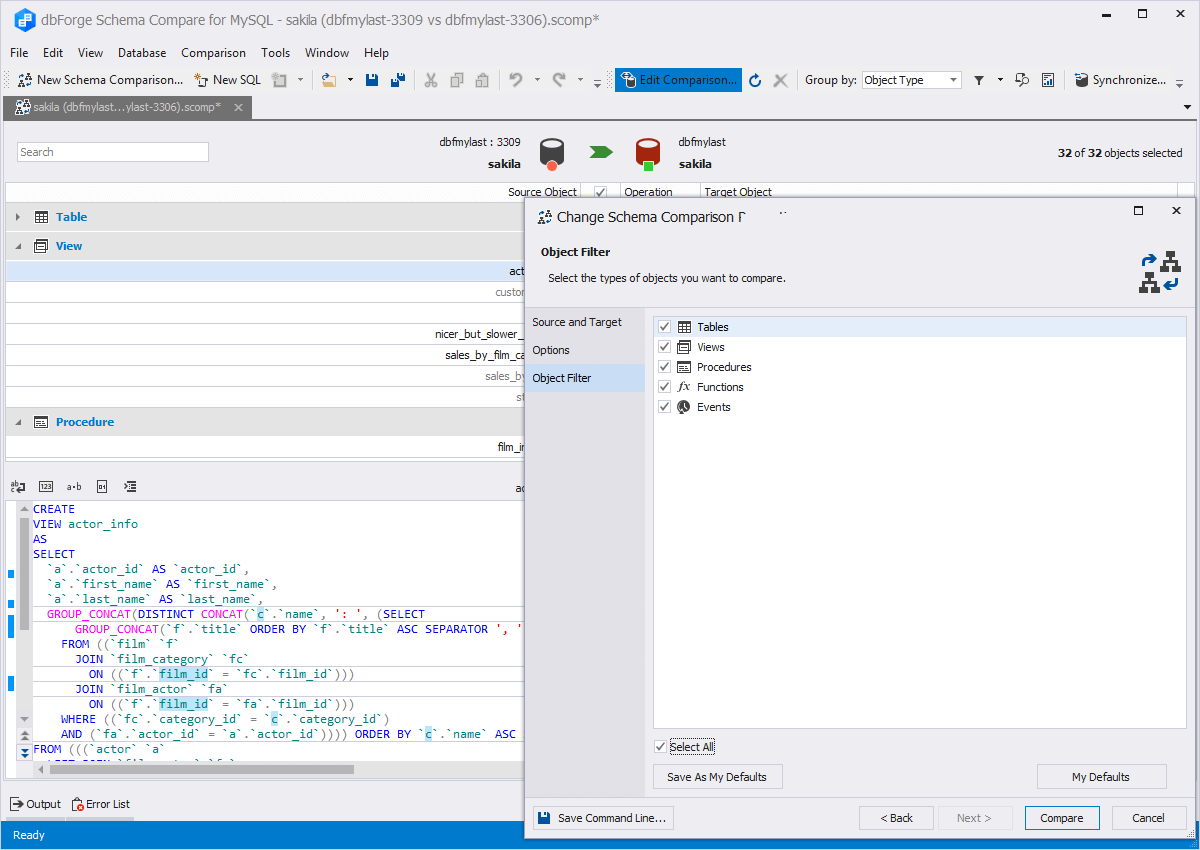
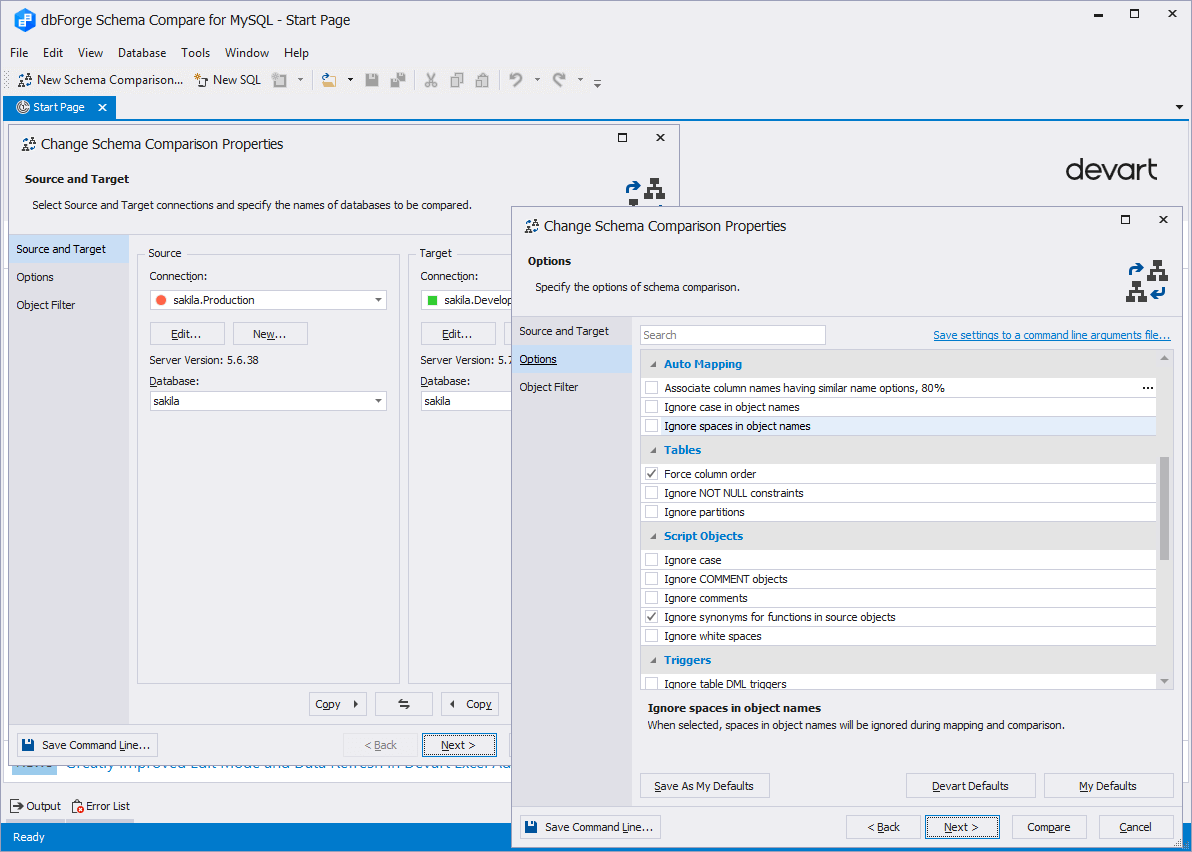
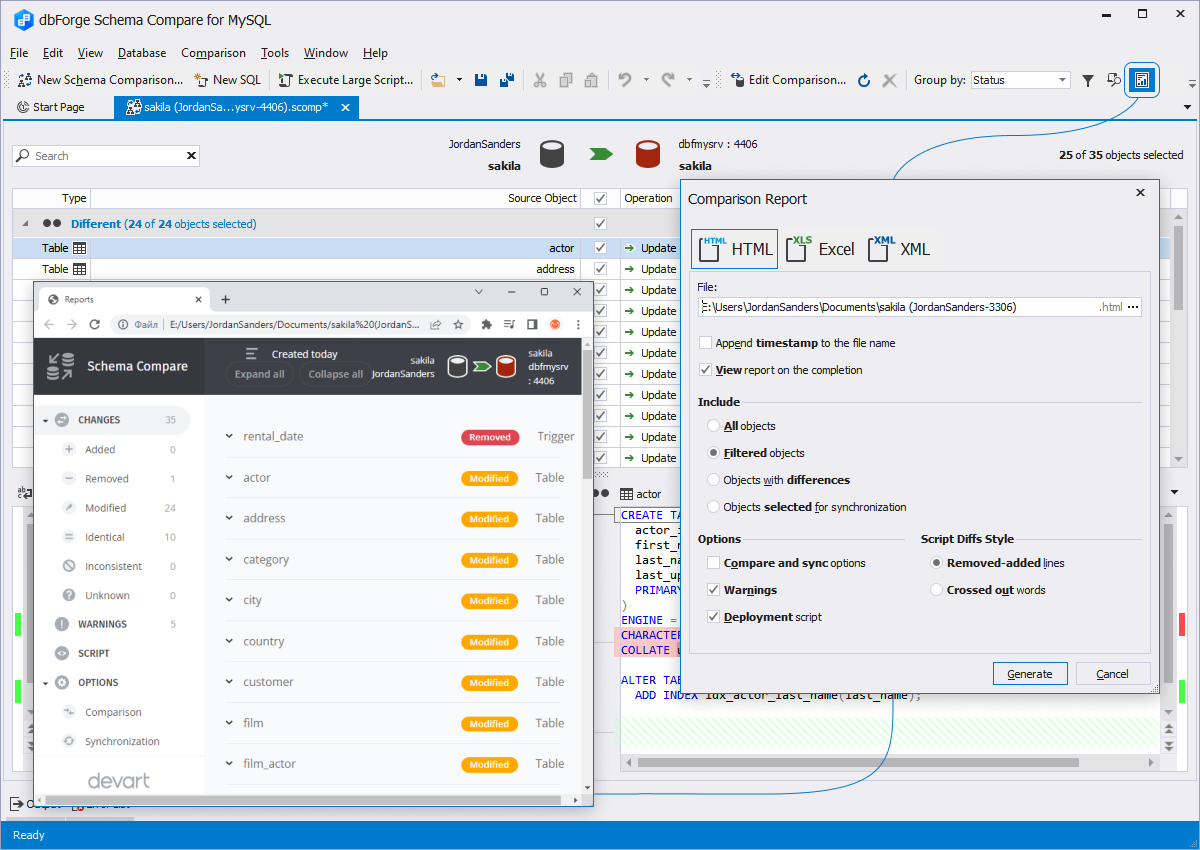
Need a fast easy-to-use tool to compare and synchronize structures of MySQL databases?
Want to quickly analyze database structure differences at a glance and propagate
the changes to a required MySQL Server on the first try? dbForge Schema Compareis is specially
designed to meet your requirements.
dbForge Schema Compare proved its worth for many developers and DBAs as part of
dbForge Studio for MySQL, a company's bestseller
product for MySQL database administration and development.
Download a free 30-day trial of version 2.20
Main advantages of Schema Compare
- Faster comparison of any databases including extra-large ones
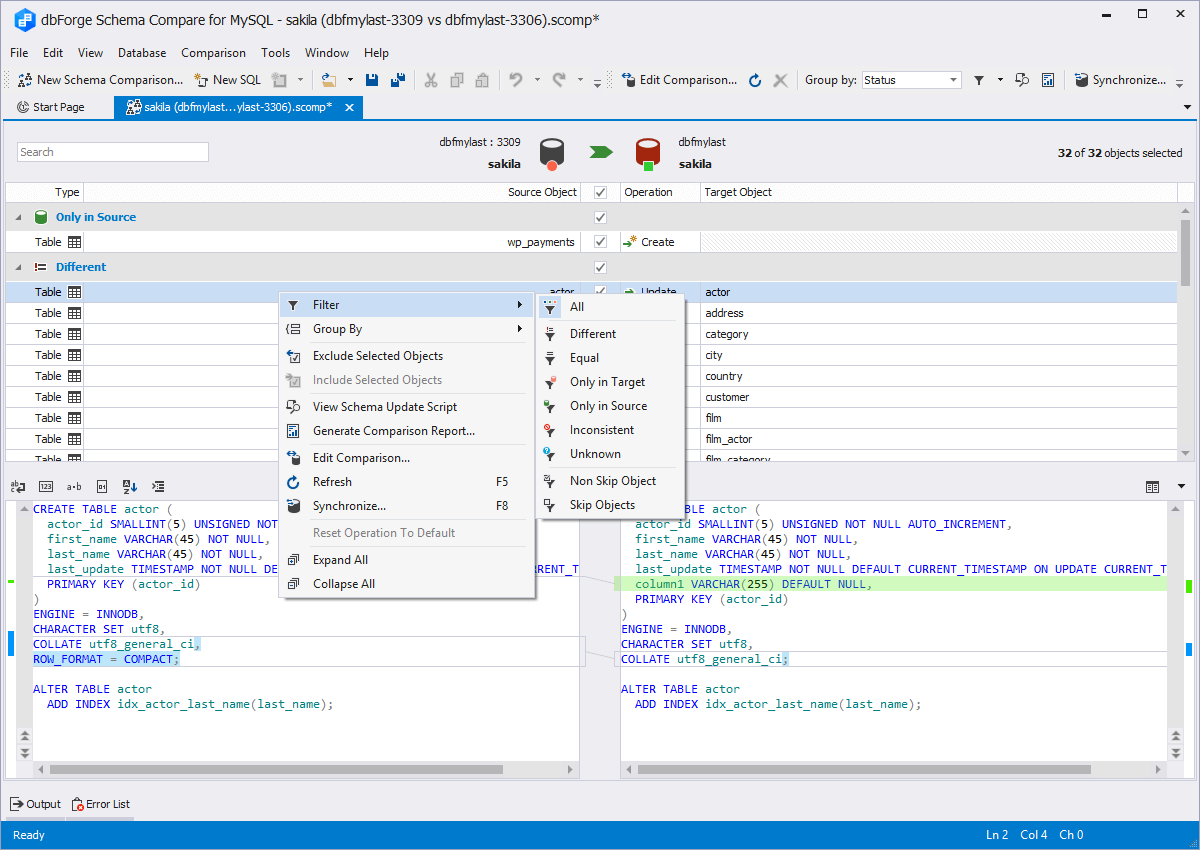
- Clear display of comparison results, no time waste for understanding what to do next
- Capability to save and load comparison settings
- Filtering, sorting, grouping for efficient management of compared objects
- Text comparer to show DDL differences of compared objects
- Preview of a synchronization script for any compared object
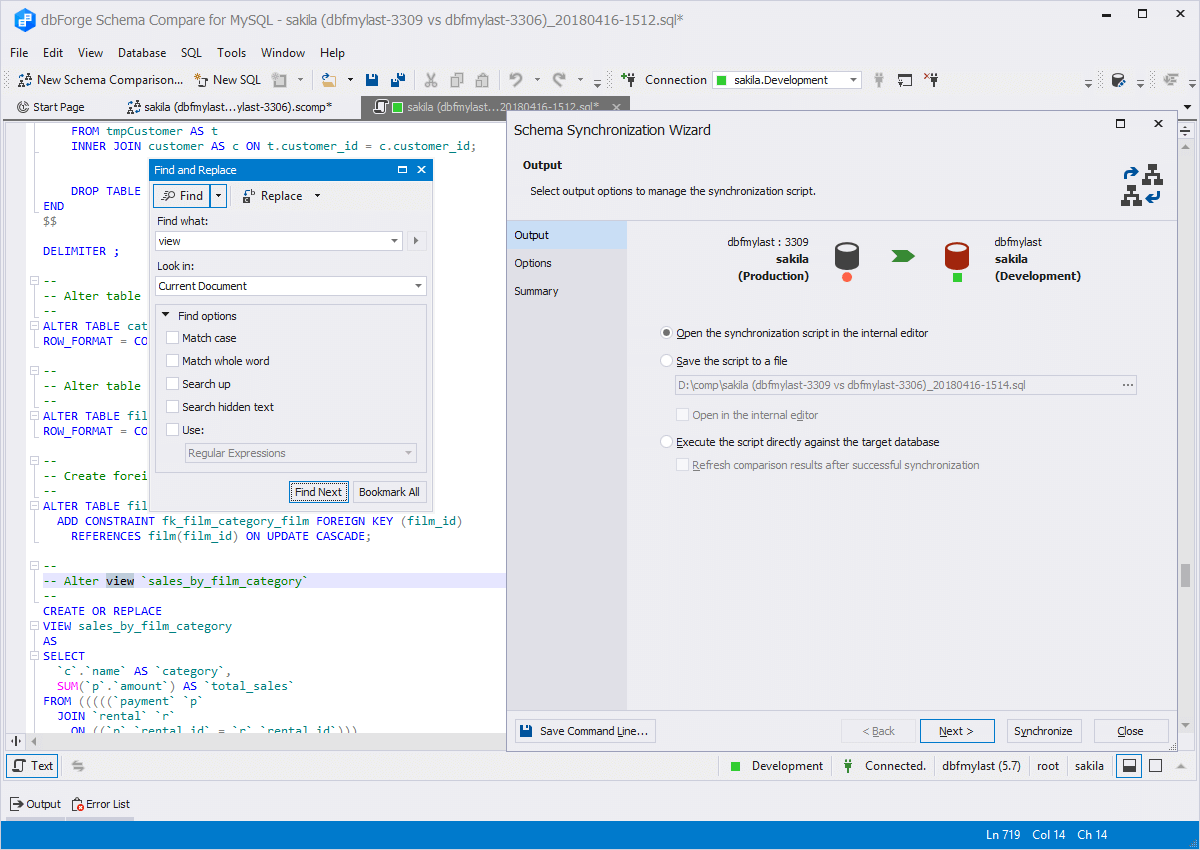
- Schema synchronization wizard to generate a standard-driven synchronization script with additional options
- Support of all MySQL server versions 3.23-5.1
- Integrated SQL editor for advanced work with SQL scripts and query files
- Well-tested functionality, reliable and safe for your database
- 30-day unlimited product trial
- Free 1-year subscription for updates
- Find more features...
If you need a professional tool for data comparison and synchronization, try
dbForge Data Compare for MySQL.
- August 31, 2010
How To: Create a Query in One Shot
To get information from a database it is necessary to execute a query to get this data.
Usually an ordinary SQL editor is used to create queries. To use such editor, one should remember the syntax of ...
- August 12, 2010
Quick start in database development with Sakila database project
The Sakila project was designed to demonstrate all cutting-edge capabilities of dbForge Studio for MySQL such as Database Projects, Database Diagram, Data Reports, Pivot Grid, Visual Query Builder, Code ...
- August 10, 2010
Be Careful While Using UNSIGNED Data Type in the Routine Body, Part 2
In one of our posts, in the Be Careful While Using UNSIGNED Data Type in the Routine Body one, we've explained how to get invalid data in routine body when using UNSIGNED data type and that in this case ...