pgAdmin is arguably the most popular open-source solution for managing and administering PostgreSQL databases. It supports multiple operating systems, it delivers extensive documentation, and it packs quite a few features that are undoubtedly vital for both beginners and experienced professionals.
However, every tool has room for improvement. What if we suggest an alternative with far wider functional capabilities and customization options? dbForge Studio for PostgreSQL is an IDE that showcases a more advanced approach to PostgreSQL management. Check the feature-by-feature comparison below to see what we mean.
Why look for a pgAdmin alternative?
pgAdmin remains one of the most popular graphical tools for PostgreSQL database management. It is free, open-source, and officially supported by the PostgreSQL community, making it the only database client that can truly be considered the official PostgreSQL administration tool.
However, as database environments grow and workflows become more complex, PostgreSQL professionals often start exploring pgAdmin alternatives that offer broader functionality and better support for advanced use cases.
User interface
One of the most common reasons for seeking an alternative is pgAdmin's user interface, which can feel cluttered when managing multiple servers, databases, schemas, and objects simultaneously. Too many panels, menus, and configuration options may increase complexity and reduce usability.
SQL development capabilities
While pgAdmin provides solid SQL development functionality, modern database IDEs offer more advanced coding assistance features, including AI-powered query generation, intelligent code completion, context-aware refactoring, and in-depth code analysis. For developers who spend most of their time writing and optimizing SQL, such advanced solutions can significantly improve productivity and code quality.
Visualization features
Although pgAdmin offers visual database management, its visualization features may be more limited than those of specialized commercial solutions. Database architects and administrators often need an alternative to pgAdmin that provides more powerful schema visualization, dependency analysis, and change-tracking capabilities.
Advanced database lifecycle management
Another major consideration is the need for advanced features such as schema comparison and synchronization, change management, performance tuning, and data analysis and reporting. While pgAdmin excels at core administration tasks, its support for comparison, synchronization, profiling, and reporting scenarios is less comprehensive than that of many commercial PostgreSQL IDEs.
Despite being a reliable and widely adopted solution for PostgreSQL administration, pgAdmin may not provide all the capabilities required by modern database teams and increasingly sophisticated workflows. As a result, the need for a more powerful and feature-rich pgAdmin alternative often becomes apparent.
What is dbForge Studio for PostgreSQL?
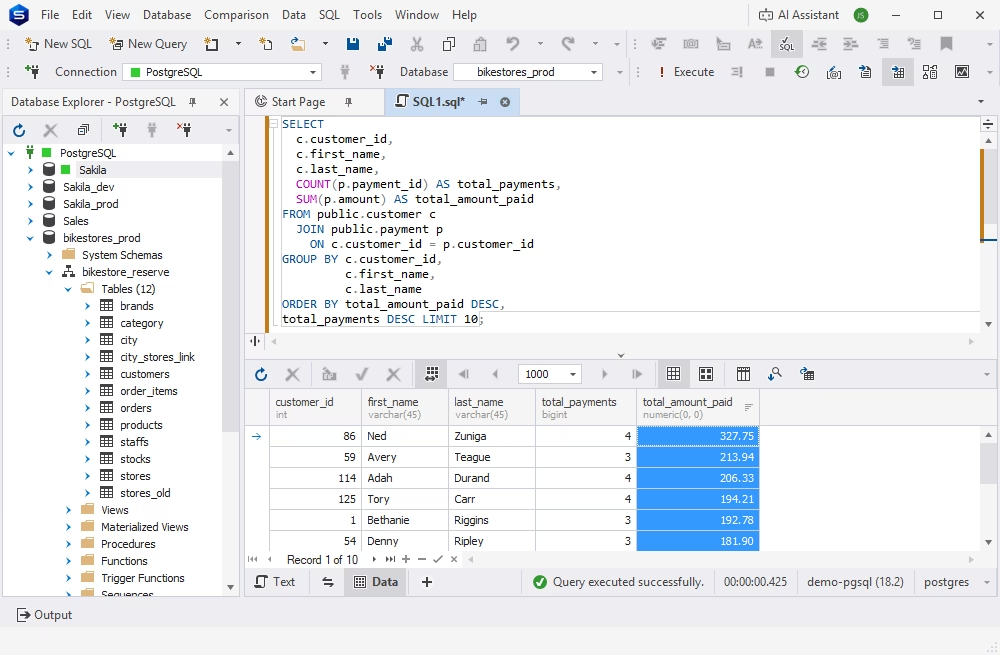
dbForge Studio for PostgreSQL is a powerful and user-friendly IDE designed to simplify database development, management, data analysis, and reporting in PostgreSQL, Amazon Redshift, and related databases and cloud platforms.
With its intuitive interface and robust functionality, the Studio offers a comprehensive toolkit to work with databases quickly, efficiently, and effortlessly. Whether you're a developer, analyst, or manager, dbForge Studio for PostgreSQL delivers an optimal solution for efficient query and data management, task automation, insightful analysis and reporting, and much more.
dbForge Studio for PostgreSQL
A feature-rich and versatile IDE for database development and management, as well as data management, analysis, and reporting
Feature comparison table: dbForge Studio for PostgreSQL vs pgAdmin
Let us compare the functionality of dbForge Studio for PostgreSQL and pgAdmin in detail. We have compiled a comparison table with comprehensive information on all essential features that are available in these solutions.
Data analysis & reporting
Key advantages of dbForge Studio for PostgreSQL
dbForge Studio for PostgreSQL comprises all essential database management tools in a single environment, allowing users to write and execute SQL queries, manage and analyze data, design database structures, and edit database objects without switching between multiple applications. For many users, dbForge Studio is considered to be the best pgAdmin alternative on the market.
Let's take a closer look at the key features of dbForge Studio for PostgreSQL.
dbForge Studio for PostgreSQL
A feature-rich and versatile IDE for database development and management, as well as data management, analysis, and reporting
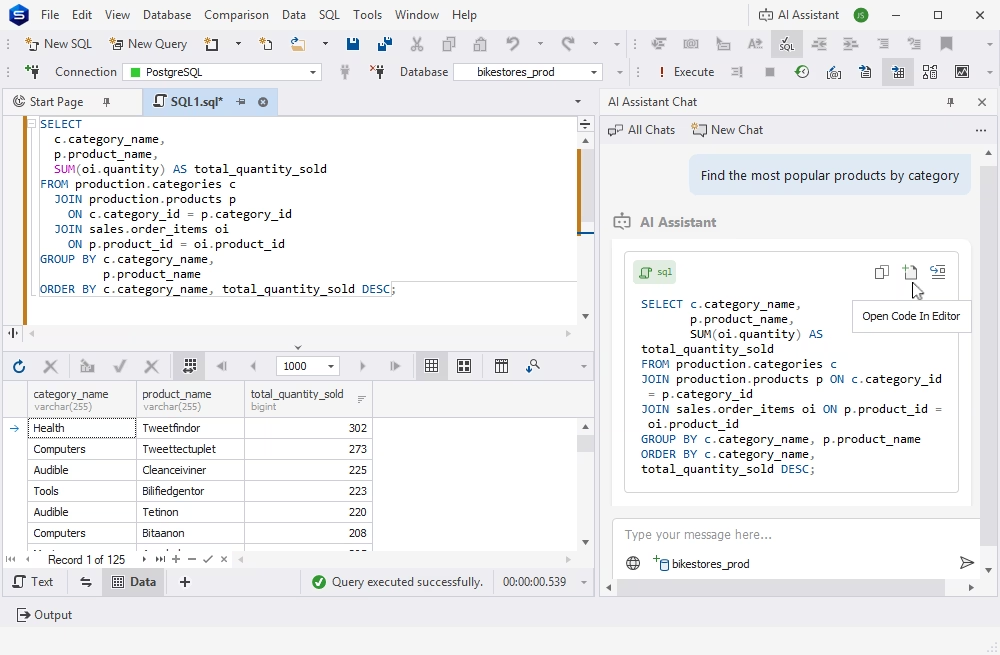
Integrated dbForge AI Assistant
dbForge AI Assistant is an AI-powered tool for generating, troubleshooting, and optimizing SQL queries, as well as getting guidance on everything related to SQL and SQL coding.
The Assistant is integrated into dbForge Studio and is well-versed in the specifics of PostgreSQL, Amazon Redshift, and related databases and cloud platforms.
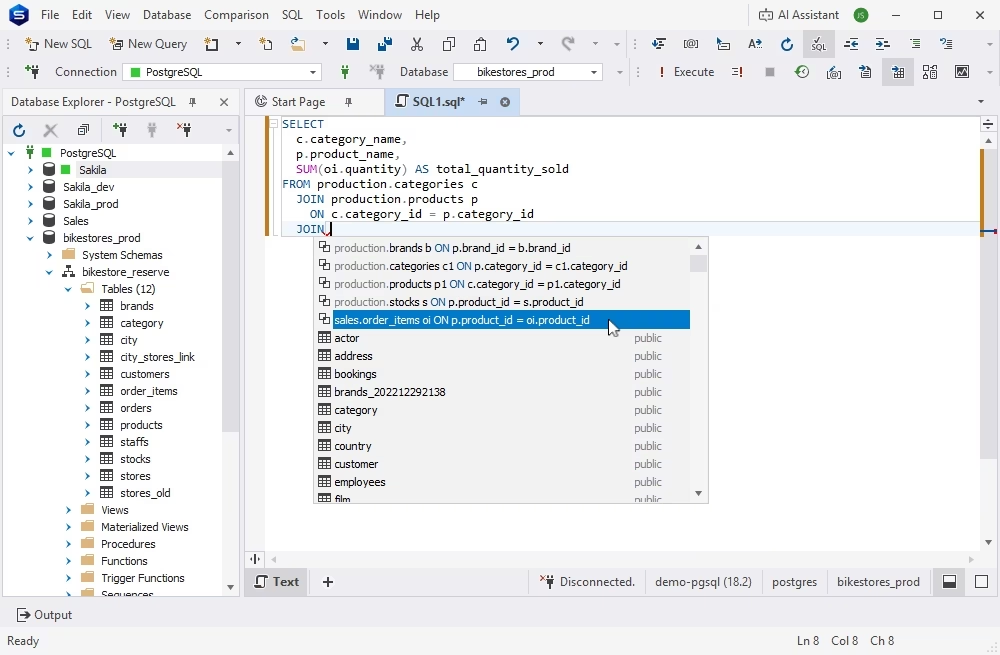
Code completion, formatting & syntax validation
dbForge Studio for PostgreSQL delivers a comprehensive set of features that help you produce SQL code faster. Smart code completion, code formatting, and syntax validation help you ensure the high quality of the output.
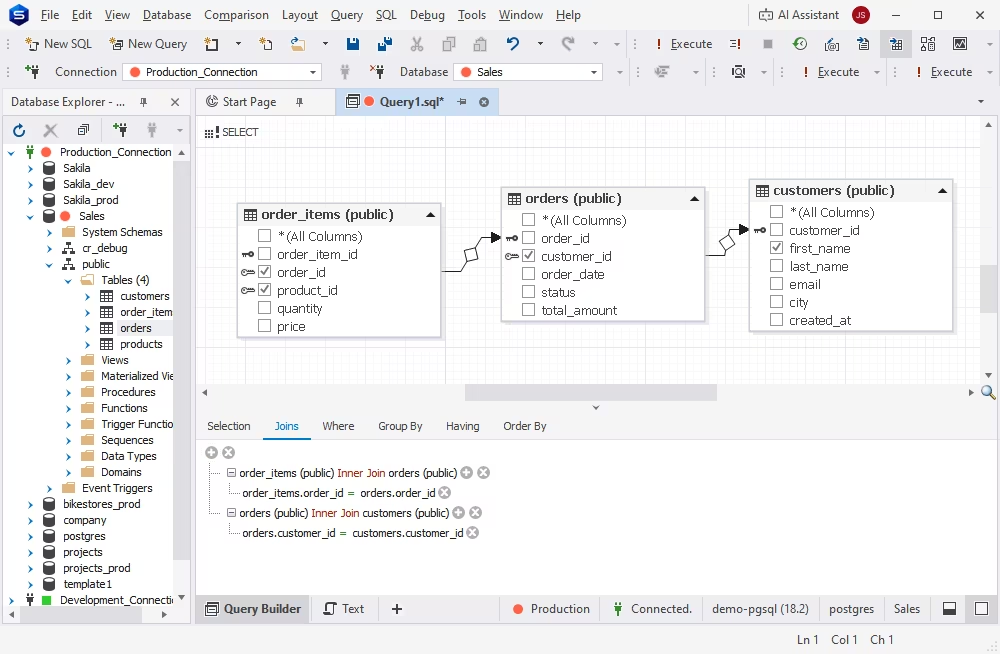
Visual Query Builder
You can create and update PostgreSQL queries by visualizing them using the intuitive diagrams of the Studio's Query Builder. Instead of writing SQL code manually, you can build SELECT statements, create JOINs, filter and sort tables simply by dragging and dropping, while Query Builder puts together the corresponding SQL syntax in the background.
PostgreSQL Debugger
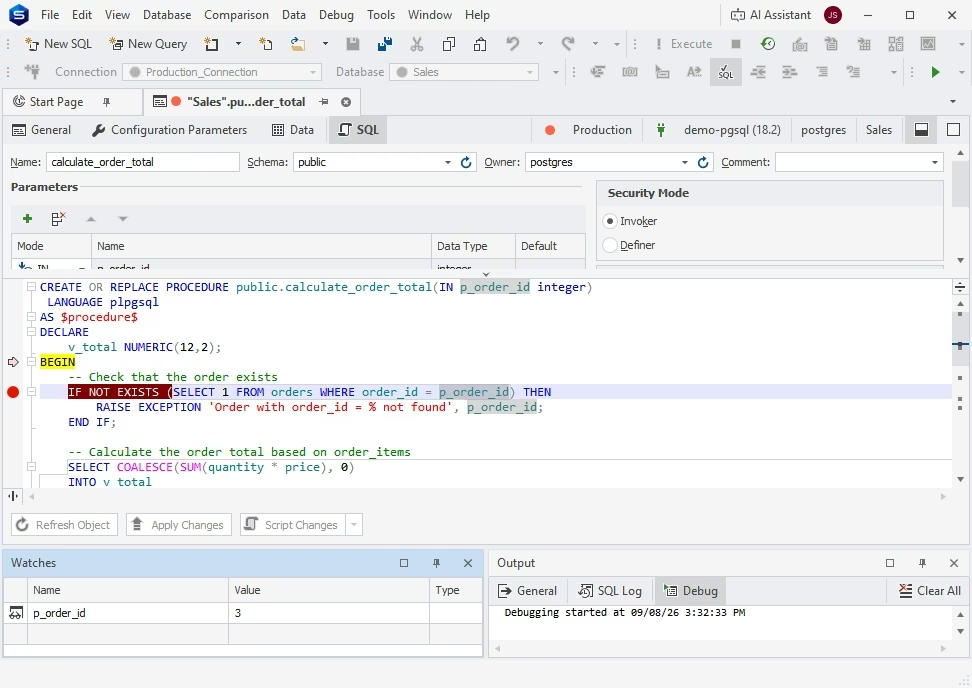
The Studio's integrated PostgreSQL Debugger helps you analyze the runtime behavior of database objects and identify logic errors. It provides step-by-step code execution, call stack browsing, breakpoints, and watches to debug your code. The intuitive interface will help you do the job visually, without guessing your way through raw PL/pgSQL.
Database comparison & synchronization
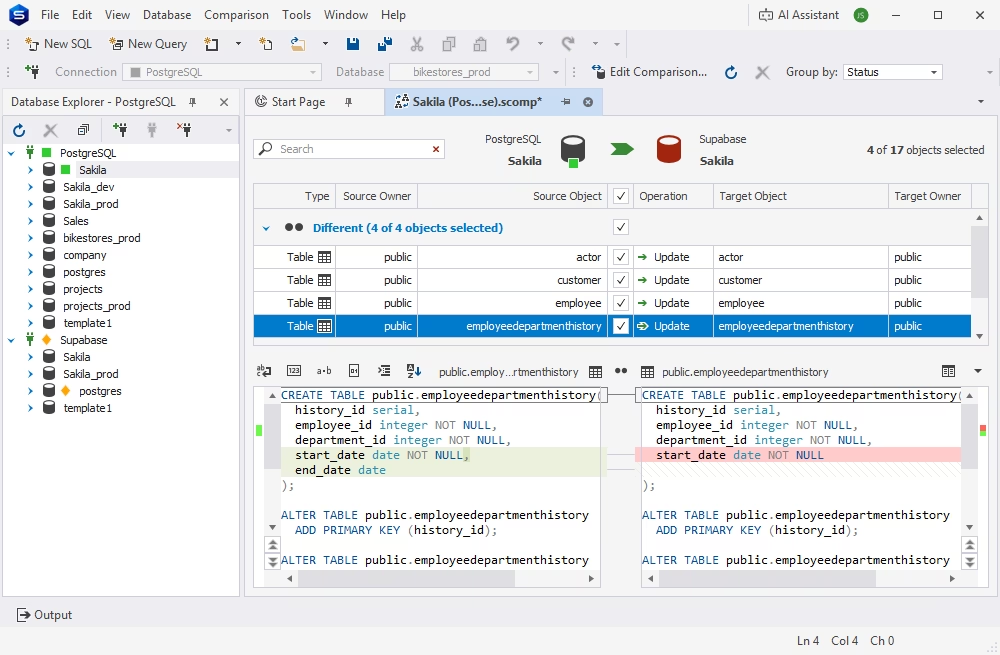
dbForge Studio for PostgreSQL provides two dedicated tools designed to perform and automate the comparison of database schemas and table data and deploy changes to the target database.
Data Editor
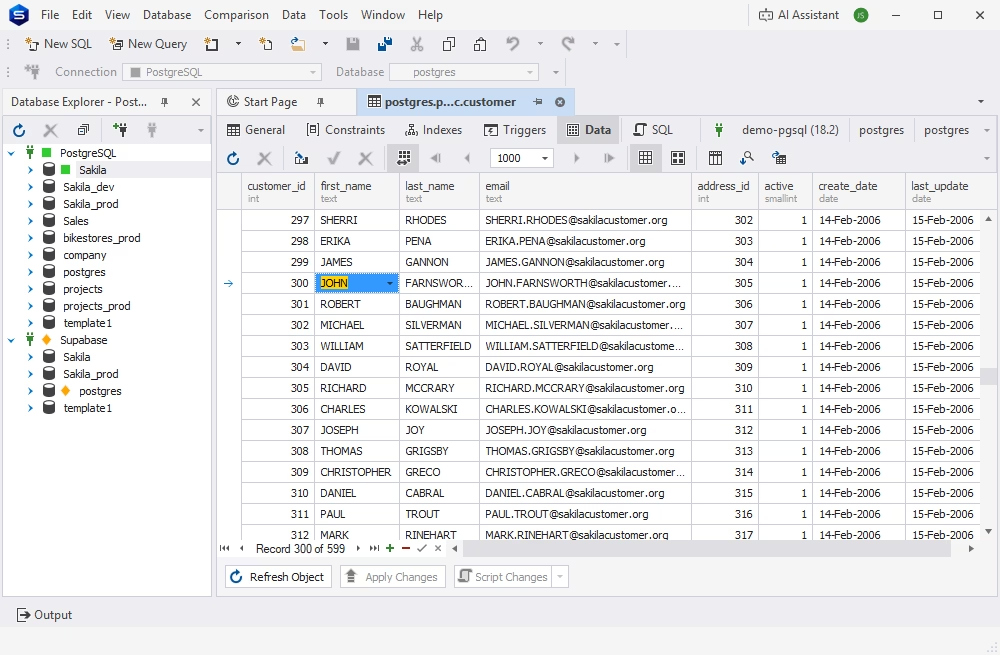
A visual Data Editor allows you to view, search, analyze, and modify data directly in a table without writing SQL queries.
Data analysis & reporting
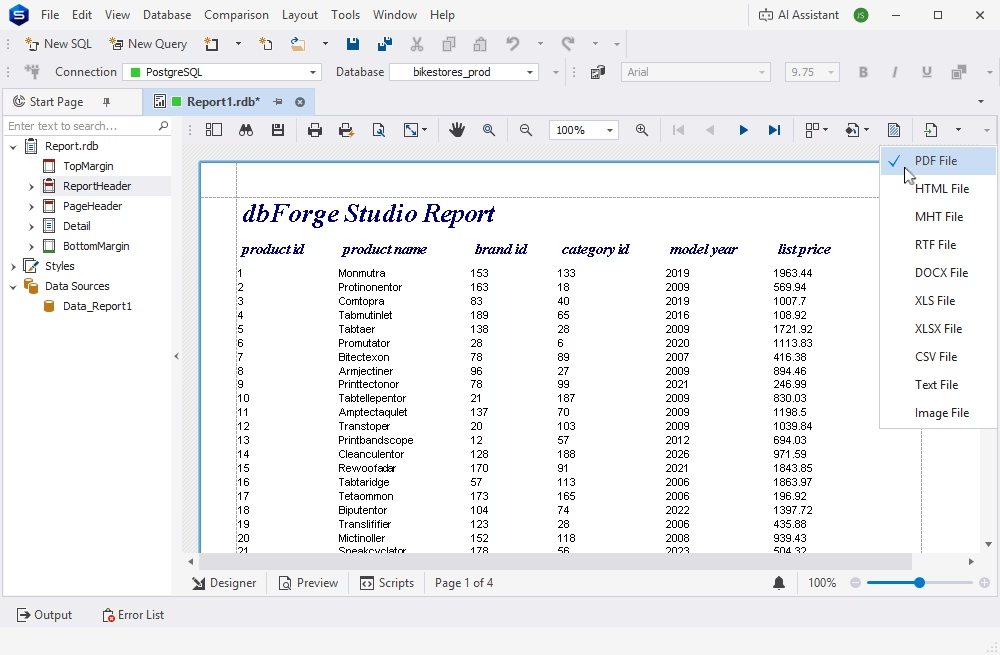
dbForge Studio offers several crucial features that help you gather data for subsequent analysis. You can aggregate, rearrange, summarize, and analyze large amounts of data visually with pivot tables, view and analyze related data in tables or views with Master-Detail Browser, and create data reports that include static text, images, shapes, and other elements.
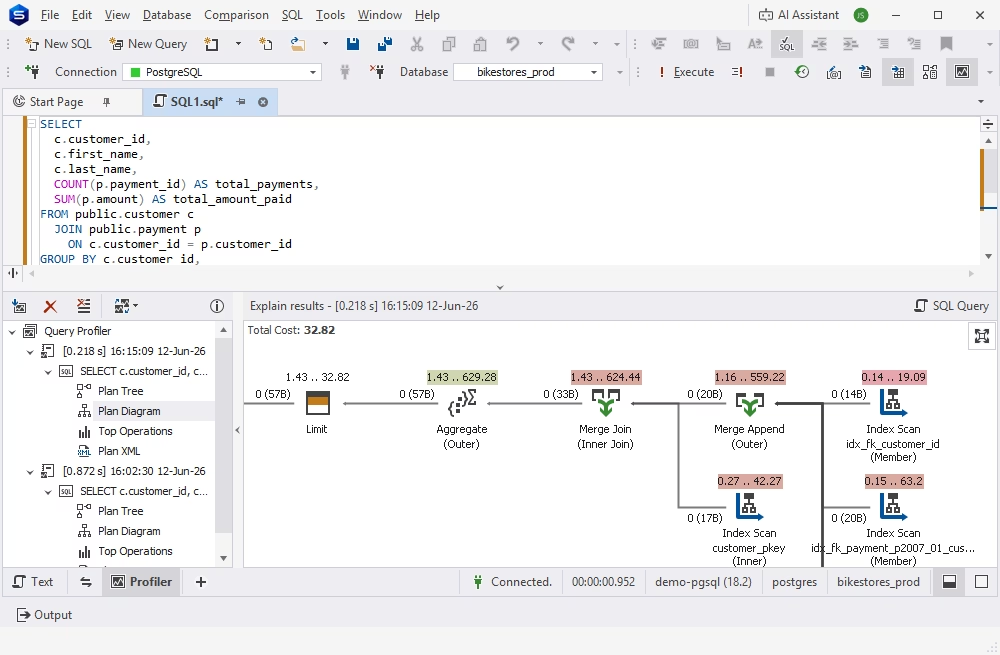
Query Profiler
The advanced query optimization functionality of the Studio examines your queries, easily finds potential execution bottlenecks, and helps you analyze query execution plans and fix slow queries.
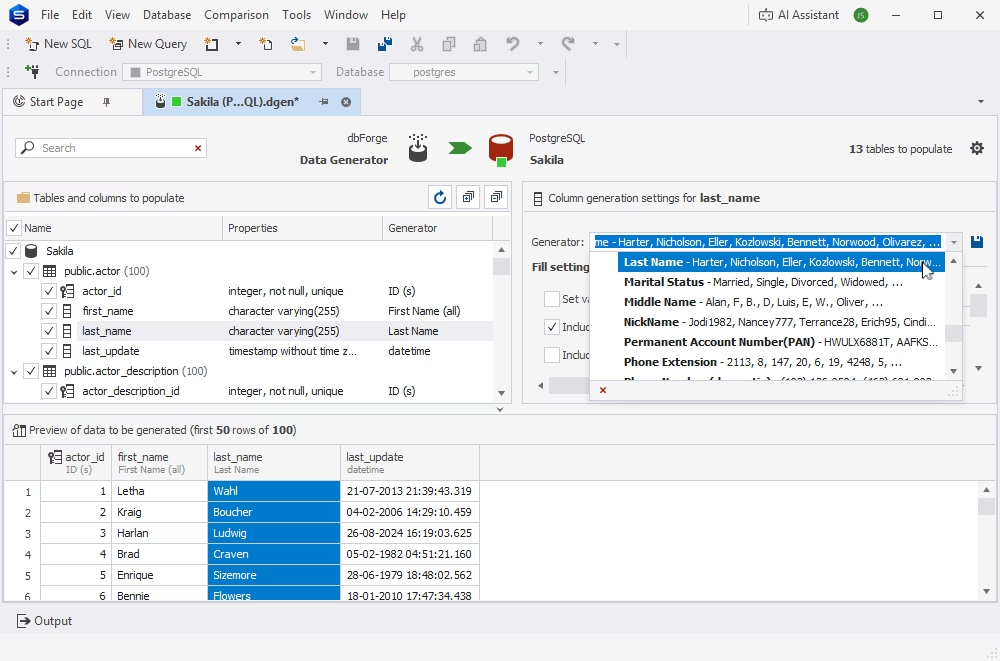
Data Generator
The built-in Data Generator is designed to create large volumes of meaningful test data and populate your database with it in a matter of moments.
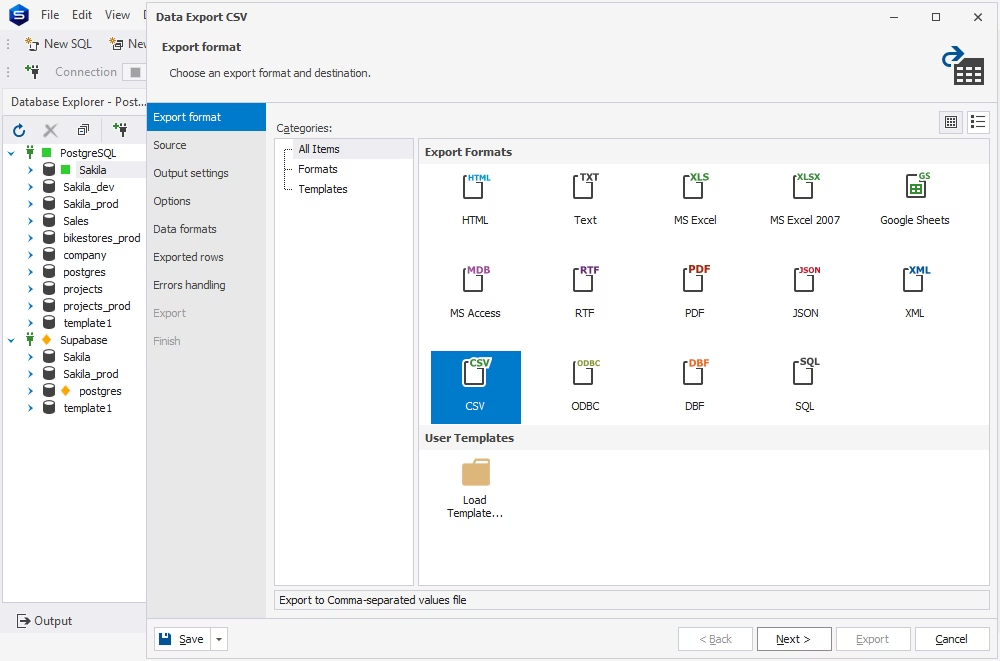
Data export & import
dbForge Studio for PostgreSQL allows you to swiftly import and export data in a variety of formats and with a rich selection of settings and automation options. The following data formats are supported: HTML, TXT, CSV, XLS, XLSX, Google Sheets, MDB, RTF, PDF, JSON, XML, ODBC, DBF, and SQL.
dbForge Studio for PostgreSQL
A feature-rich and versatile IDE for database development and management, as well as data management, analysis, and reporting
Discover the functionality, user interface, and unique capabilities of pgAdmin and dbForge Studio. By the end of this video, you'll have a clear understanding of which tool aligns best with your specific requirements.
FAQ
What is the best pgAdmin alternative for PostgreSQL development?
There are several strong alternatives to pgAdmin, including dbForge Studio for PostgreSQL, DBeaver Pro, DataGrip, or Navicat for PostgreSQL. dbForge Studio for PostgreSQL is one of the most robust and versatile options. Compared with pgAdmin, it provides better functionality, especially in the area of supporting the entire database lifecycle. Its key benefits are the schema and data synchronization, data analysis and reporting features, advanced AI-powered coding assistant, and a robust SQL Editor with advanced code completion and formatting options.
pgAdmin remains a good free administration tool, but developers who spend significant time writing SQL, managing database changes, and deploying updates often prefer a more feature-rich IDE.
Is there a pgAdmin alternative with schema compare and data compare tools?
Yes. dbForge Studio for PostgreSQL includes both the dedicated Schema Compare and Data Compare tools.
Schema Compare compares database structures (tables, views, indexes, functions, etc.) and generates synchronization scripts.
Data Compare compares table data between databases and synchronizes differences.
These capabilities are absent from pgAdmin and typically require additional tools or custom workflows.
Which pgAdmin alternative is best for Windows, Mac, and Linux?
Some of the popular database management tools are cross-platform: DBeaver, Navicat for PostgreSQL, and DataGrip offer native applications for macOS and Linux. dbForge Studio for PostgreSQL is a native Windows application, but it runs smoothly on macOS and Linux with the help of compatibility solutions, such as CrossOver or Wine.
When should a team switch from pgAdmin to dbForge Studio for PostgreSQL?
As a rule, switching from pgAdmin to dbForge Studio for PostgreSQL is caused by the growing complexity of workflows and demands for a solution that would cover the full database lifecycle. When developers need schema and data comparison tools, more advanced SQL development capabilities, data analysis and reporting features, and the automation of regular tasks, dbForge Studio offers rich options, while pgAdmin may prove insufficient.