DataGrip and DBeaver belong to the most popular choices when it comes to the daily development and management of relational databases across multiple systems. But what if you're looking for a more advanced set of database tools?
This is where dbForge Edge enters the stage. This multidatabase solution comprises four consistently designed all-in-one IDEs that cover all major database systems. Below we are comparing dbForge Edge to DataGrip and DBeaver. Check it out—chances are that dbForge Edge is exactly what you're looking for.
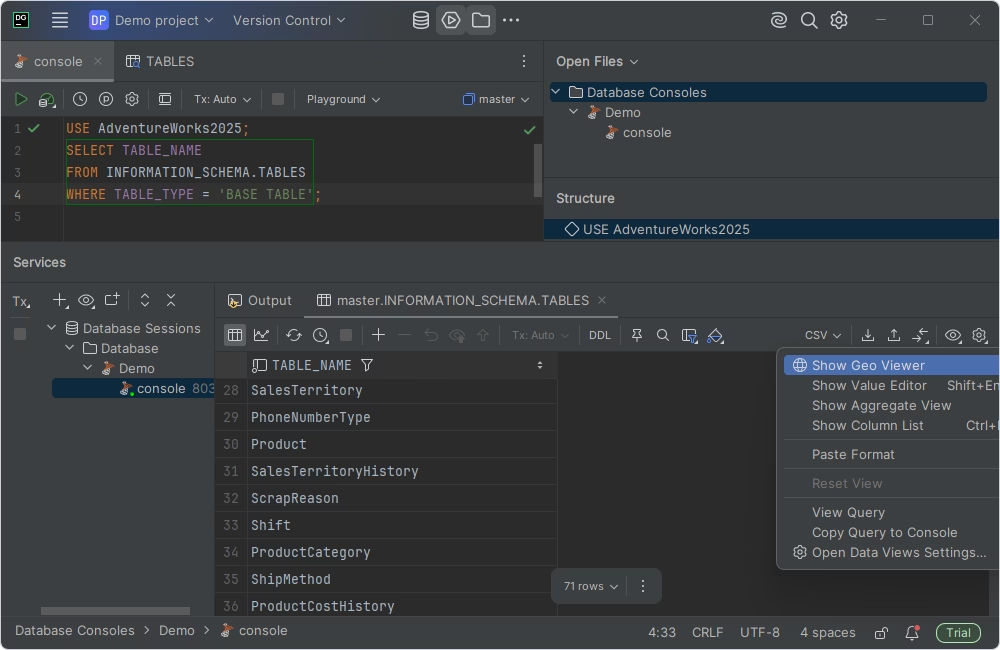
About DataGrip
DataGrip is a cross-platform database IDE designed for professional SQL developers and database administrators. It covers a considerable range of databases and delivers versatile tools for writing and analyzing SQL code as well as managing data.
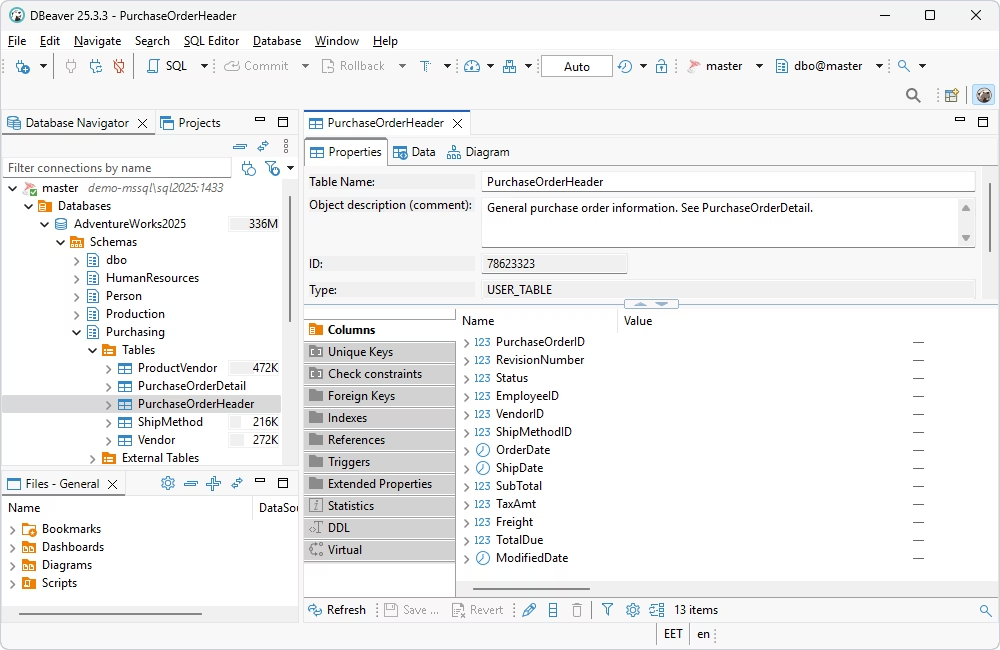
About DBeaver
DBeaver Ultimate is a commercial edition of DBeaver, a cross-platform SQL database client for in-depth data management and completion-aided SQL development. It is compatible with numerous data sources, including multiple database systems and cloud services.
About dbForge Edge
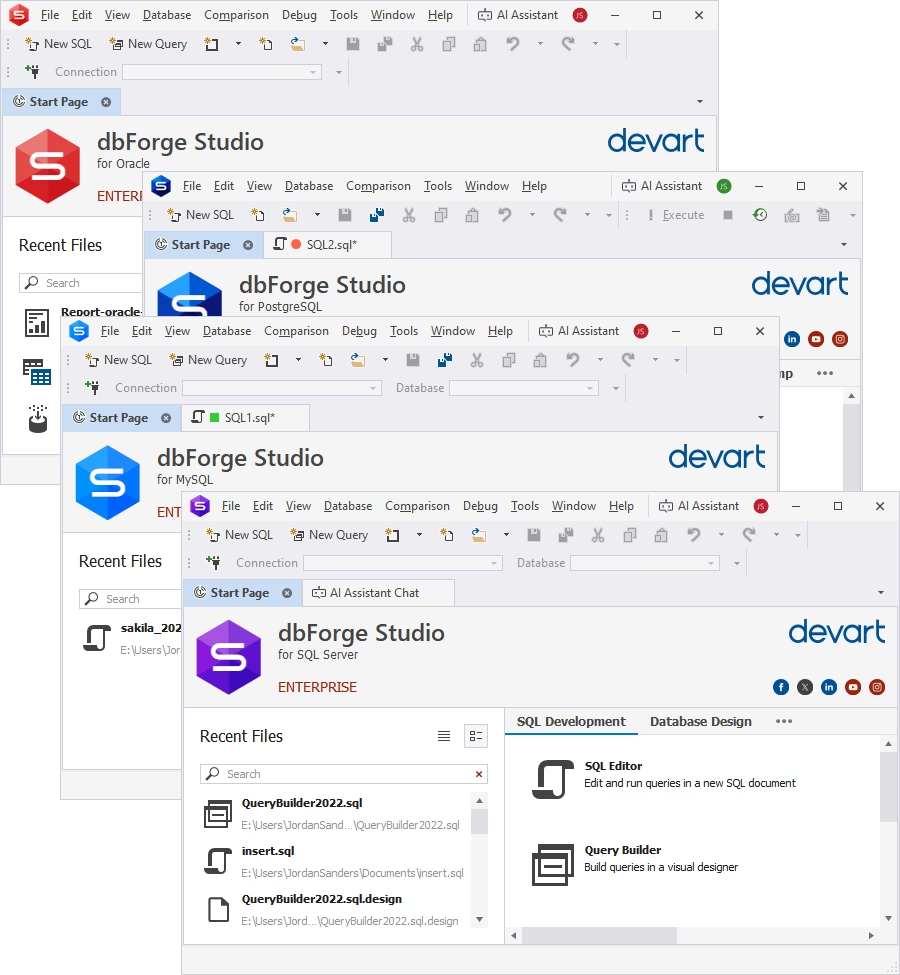
dbForge Edge is an AI-powered multidatabase solution that covers every stage of the database lifecycle. It supports major database systems, including SQL Server, MySQL/MariaDB, Oracle Database, PostgreSQL, Amazon Redshift, and related cloud databases.
The solution includes four all-in-one IDEs, called Studios, each designed for a specific database system. Every Studio provides an extended feature set that helps users efficiently perform the database tasks for their chosen platform.
dbForge Edge
A unified cross-database solution that empowers teams to design, develop, and manage multiple database systems from a single workspace
Pricing, licensing, and free version differences
All three tools offer both free and paid editions. Each product also provides a fully functional trial version, allowing users to evaluate premium features before purchasing.
The free editions include essential features for SQL development, database management, and administration. Let's take a closer look at them.
dbForge Edge vs DataGrip vs DBeaver: Comparison table
Now, let us compare the full functionality of all the three products. The following table contains a detailed feature comparison of dbForge Edge, DataGrip, and DBeaver. For quick navigation, please use the side menu.
Database development & design
Data analysis & reporting
Key advantages of dbForge Edge
dbForge Edge is designed to cover a broad range of database-related tasks, including database development and design, database management, data analysis, and database administration.
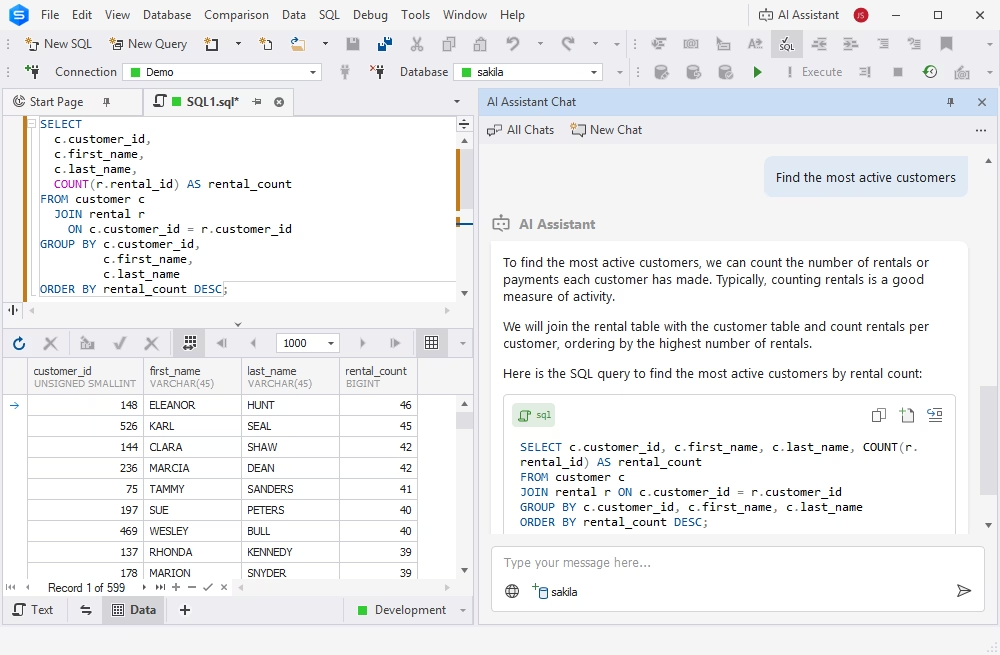
Integrated dbForge AI Assistant
dbForge AI Assistant is an AI-powered copilot that generates, explains, troubleshoots, and optimizes SQL queries. It also provides full guidance on everything related to SQL and databases. The AI Assistant is integrated into dbForge Edge and is well-versed in the specifics of the most popular database management systems on-premises and in the cloud.
SQL development
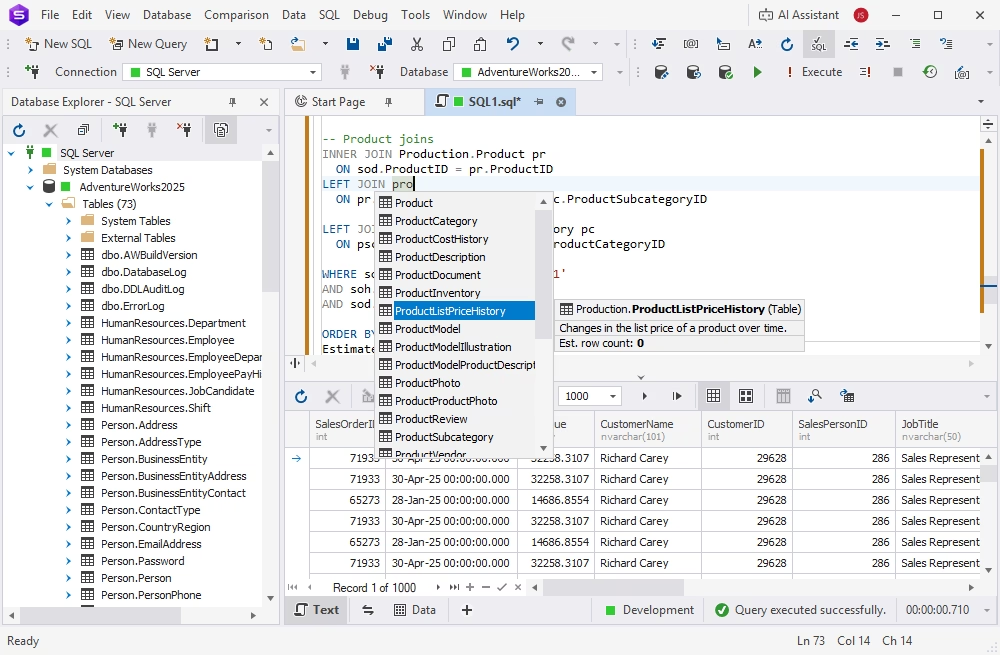
dbForge Edge offers some of the most advanced SQL coding assistance tools on the market. The available features include smart code completion, syntax check, rich formatting options, code refactoring, and many more.
- Context-aware code completion
- Instant syntax check
- Code snippets
- Rich formatting options with predefined and custom profiles
- Smart refactoring with auto-correction of references to renamed objects
- Debugging of SQL scripts, stored procedures, functions, and triggers
Database comparison and synchronization
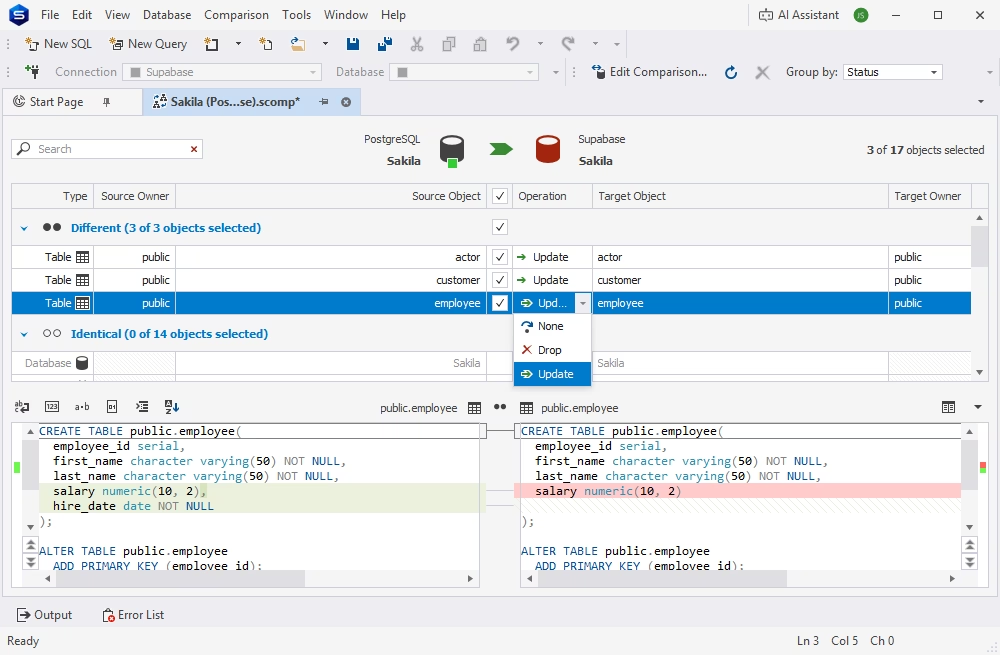
Database comparison and synchronization tools cover both database schemas and table data, thus providing an efficient solution for cross-server database operations.
- Locate and analyze schema and table data differences
- View differences per object/record
- Save and load comparison settings
- Generate data synchronization scripts
- View comparison reports in CSV, HTML, and XLS
- Automate comparison and synchronization tasks via CLI
Database Designer
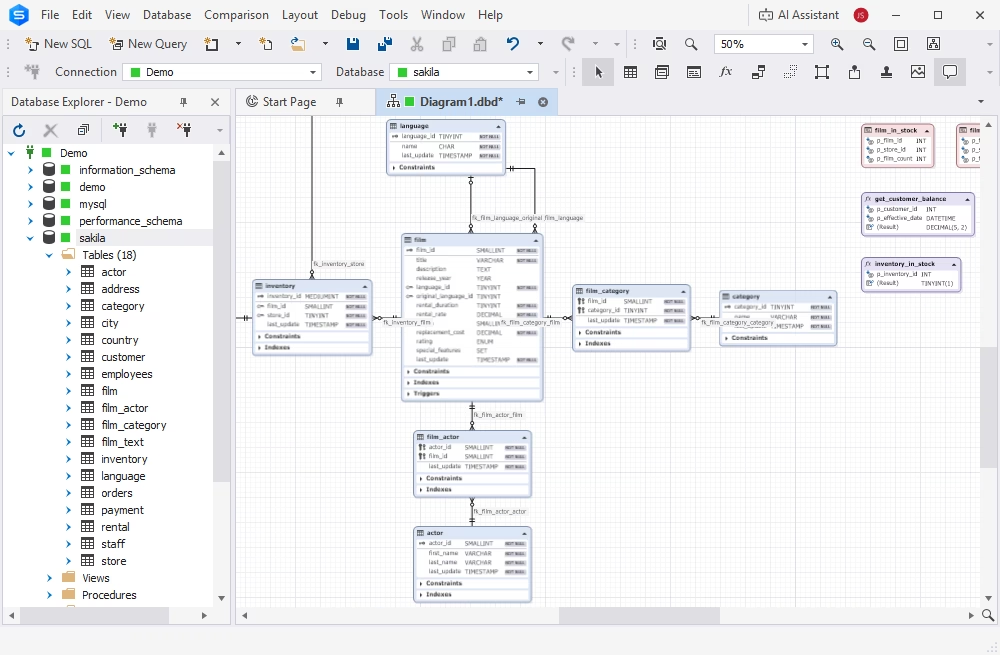
With dbForge Edge, databases can be designed and adjusted visually, using ER diagrams with relationships between tables. The solution also allows direct editing of database objects and object grouping in containers.
- Generate schema diagrams of any complexity
- Visually design and modify database structures
- Add and view foreign key relationships between tables
- Display database objects and their properties
- Perform reverse engineering of database diagrams
Data Editor
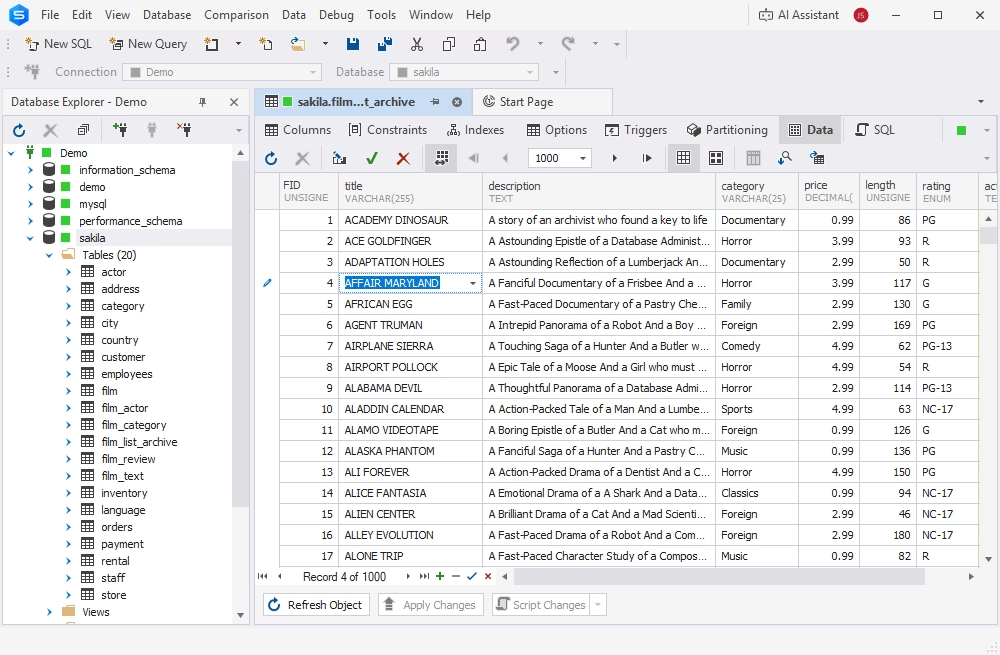
dbForge Edge provides tools for simple access to table data, including viewing and editing, as well as exporting data into multiple formats.
- View, edit, delete, group, sort, filter, and visualize data
- Use the paginal mode for convenient viewing
- Use the auto-search mode for simplified navigation
- View data in cards using the Card View mode
- Export data to an INSERT query in a matter of moments
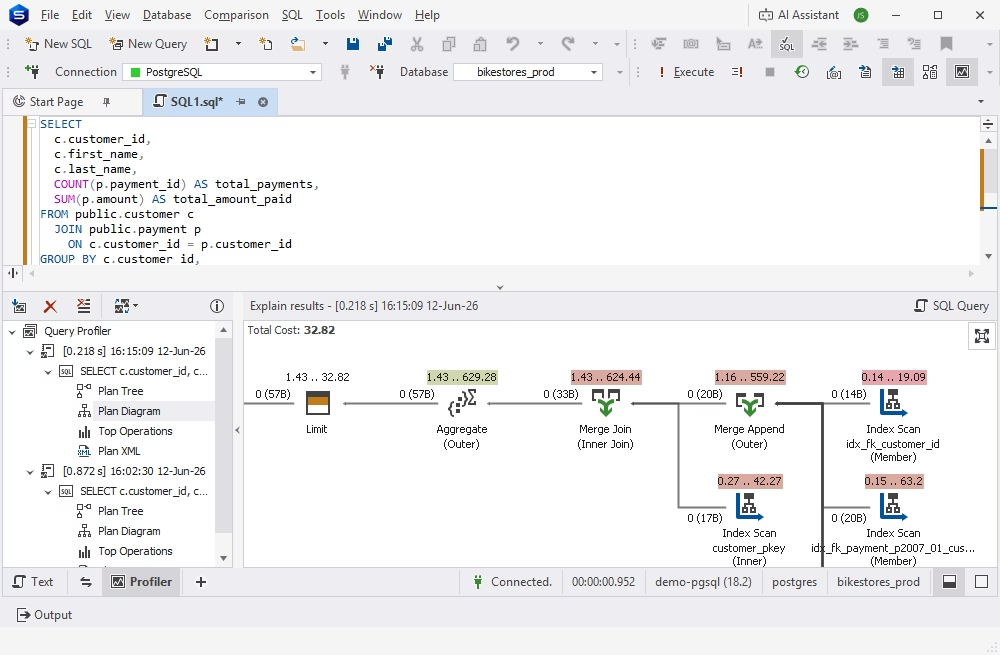
Query Profiler
Query Profiler helps analyze SQL queries, detect all bottlenecks, and optimize queries. An intuitive visual interface simplifies the task significantly.
- Detect query performance bottlenecks
- View the EXPLAIN plan and profiling results
- Compare differences in query profiling results visually
- Get a clear and automated way to profile queries
- Trace queries and diagnose performance issues
Data Generator
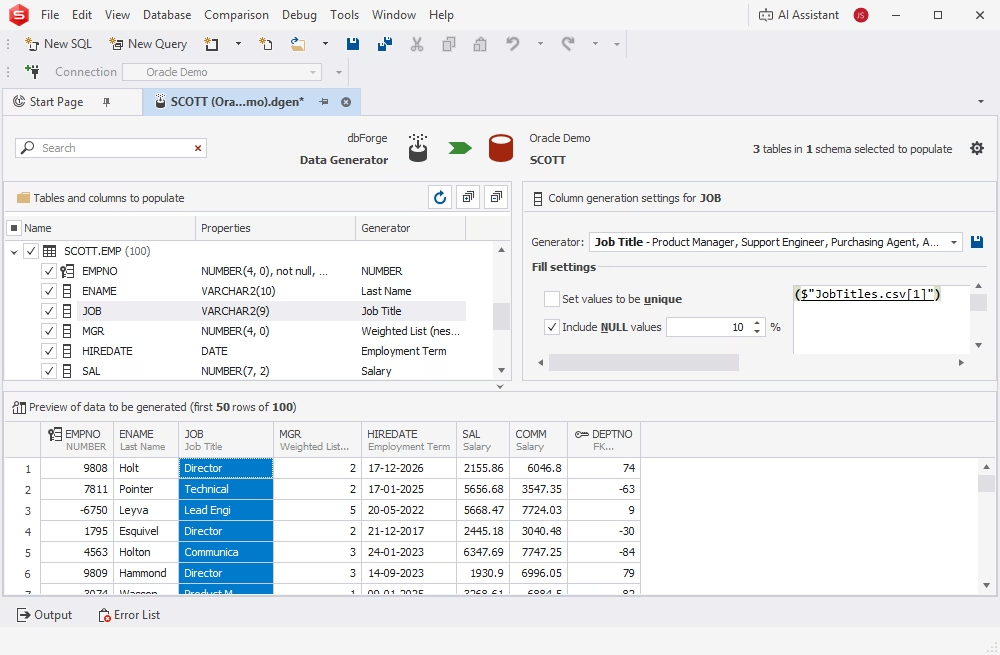
The integrated Data Generator produces any volume of high-quality realistic data of the required data types for testing and automatically populates tables with it.
- Generate large volumes of realistic test data
- Keep your data consistent across multiple tables
- Preserve inter-column data dependencies
- Create, set up, and share custom generators
- Populate your databases with test data in a few clicks
- Automate and schedule routine tasks
DataGrip or DBeaver or dbForge: How to choose
DataGrip, DBeaver, and dbForge Edge are strong database tools, but they serve slightly different priorities. The choice depends on your specific workflow: whether you require in-depth SQL coding experience, broader connectivity, or built-in database administration features.
When to choose DataGrip
DataGrip is the most developer-centric product, optimized for engineers who spend most of their time writing, refactoring, and maintaining SQL code across environments. It prioritizes intelligent SQL workflows over operational database administration. You will not get the same depth of built-in backup management, user administration, or diagnostic tooling found in DBA-oriented platforms.
DataGrip is usually the best fit for:
- Teams already using JetBrains tools
- Backend engineers who manage complex SQL codebases
- Schema-heavy development environments
- Migration-driven workflows
When to choose DBeaver
DBeaver focuses on accessibility and broad compatibility. It supports a wide range of relational databases and works as a universal database client for mixed environments. DBeaver has also expanded AI support substantially, though some advanced workflows remain limited outside paid editions. Choose DBeaver when flexibility, database compatibility, and low barrier to entry are your top concerns.
DBeaver is frequently the best option when:
- Workflow mixes development, querying, and lightweight administration
- Pricing flexibility is critical
- Broad database compatibility is essential
- Cross-platform environments require a universal workflow
When to choose dbForge Edge
dbForge Edge is an all-around database solution that is more focused on giving teams a centralized visual management environment than pure coding. Overall, dbForge Edge is designed for users who manage databases operationally and need strong analytical, administration, and automation capabilities, besides writing SQL code. It is particularly attractive for DBAs, DevOps-oriented teams, and organizations that prefer low-code database management interfaces.
It is often the better choice when:
- Database administration is part of daily work
- Teams prefer GUI-driven workflows
- Security and permission management matter
- Backup and maintenance tools should be integrated
- Task automation is required
dbForge Edge
A unified cross-database solution that empowers teams to design, develop, and manage multiple database systems from a single workspace
FAQ
Which tool has better autocompletion and SQL editing features?
For SQL coding productivity, DataGrip and dbForge Edge are generally considered stronger in autocompletion, refactoring, and intelligent SQL editing. These tools provide context-aware suggestions and better handling of complex queries, CTEs, aliases, and navigation.
Which tool is easier to learn for a new database developer?
dbForge Edge offers a visual approach, providing a smart GUI and comprehensive wizards for quick no-code task configuration, making it easier for beginners to learn. DBeaver is also often considered beginner-friendly because it is simpler conceptually, free to start, and designed more like a universal database client than a full IDE. Many new users appreciate its straightforward connection management and broad database support. DataGrip typically has a steeper learning curve.
Is DataGrip or DBeaver better for database administration tasks?
For database administration tasks, DBeaver is often stronger than DataGrip because it includes more DBA-oriented features, such as connection management, administrative utilities, cloud integrations, and monitoring support. DataGrip is more developer-focused and places greater emphasis on SQL coding capabilities.
Which tool is better for working across multiple database systems?
For working across multiple database systems, DBeaver typically has the advantage in terms of database coverage and connectivity. It supports a large number of relational and non-relational systems, cloud services, and JDBC drivers. DataGrip also supports many databases but focuses more on polished SQL development for mainstream relational databases. dbForge Edge supports SQL Server, MySQL, MariaDB, Oracle, PostgreSQL, Amazon Redshift, and related cloud services.
Can dbForge Edge replace both DataGrip and DBeaver in one workflow?
dbForge Edge can replace both DataGrip and DBeaver in a single workflow for many teams. It combines advanced SQL development capabilities with administration, comparison, synchronization, documentation, and database design tools across SQL Server, MySQL, Oracle, MariaDB, and PostgreSQL. Among these three products, it offers one of the most comprehensive feature sets in a single solution.
Is dbForge Edge better for teams that work across SQL Server, MySQL, Oracle, and PostgreSQL?
dbForge Edge is especially compelling for teams working simultaneously with SQL Server, MySQL, Oracle, and PostgreSQL because it provides a unified interface and toolset across all those systems. Teams can avoid switching between separate native tools or inconsistent workflows. Features such as schema and data comparison, query profiling, database diagrams, synchronization, and test data generation are particularly valuable for DevOps teams.
Why choose dbForge Edge instead of DataGrip or DBeaver?
DataGrip is generally best suited for teams prioritizing SQL editing and developer productivity. DBeaver is a strong choice when maximum database compatibility is needed in a cost-effective, general-purpose client. dbForge Edge provides a consolidated platform that combines development, administration, comparison, synchronization, and database design tools across major enterprise database systems.

 dbForge Edge Express


