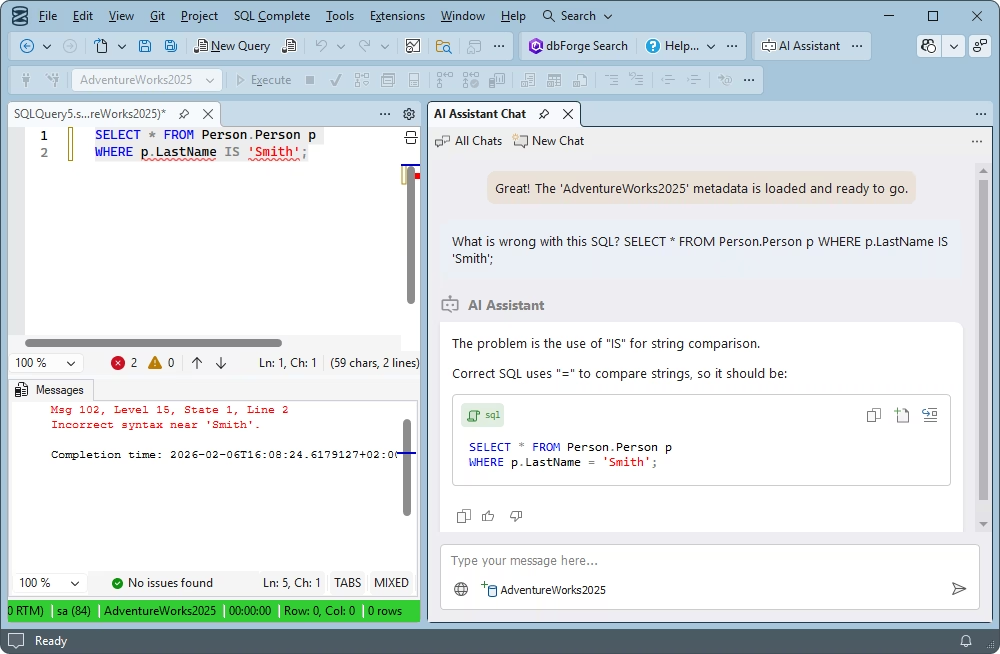
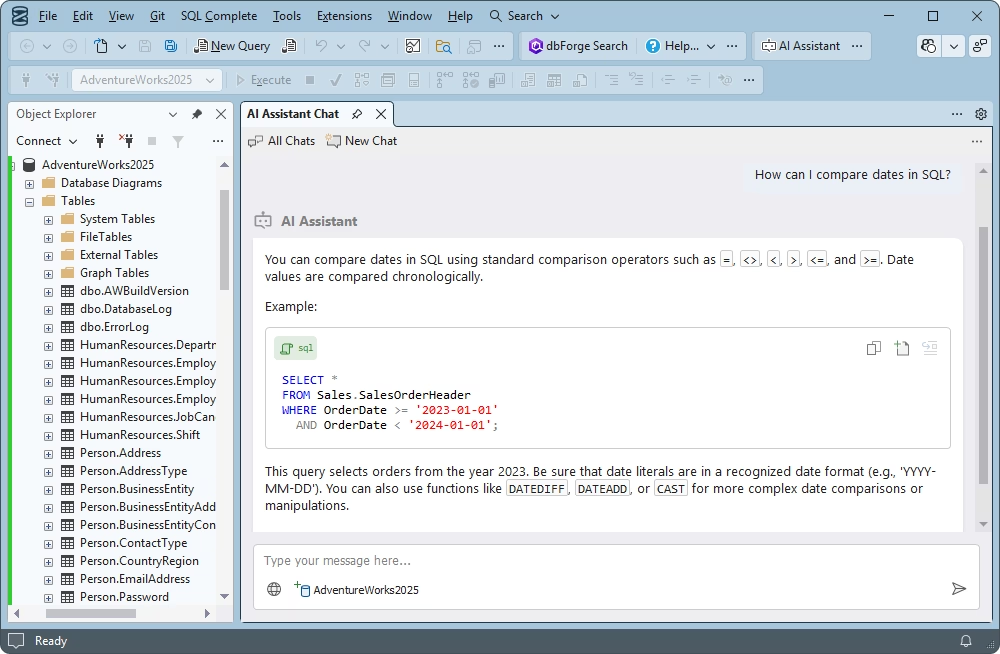
First off, the native SSMS IntelliSense is not as context-aware as you would like it to be. It often struggles with complex queries (e.g., CTEs, temp tables, dynamic SQL, or cross-database references). It can miss suggestions or show irrelevant ones because it doesn't grasp the database context all that well.
Next, there is no code analysis as such. It won't warn you about anti-patterns, performance issues, or risky constructs.
There is no refactoring either. Thus, when it comes to renaming objects, extracting logic, or restructuring queries in a safe way, you are on your own.
Let's also mention the absence of tools for the debugging of complex queries, stored procedures, triggers, and functions—another must-have for a power user.
Finally, there are several other issues with the native IntelliSense for SQL Server like incomplete T-SQL syntax support, performance issues on large databases, inconsistent behavior on slow connections, and the absence of advanced productivity features.
Thus, the native SQL IntelliSense in SSMS is useful for simple, lightweight queries. But if you require better performance and stability, advanced SQL development capabilities, and a focus on productivity, you should consider high-end SSMS add-ins like dbForge SQL Complete.