Have you outgrown Adminer's capabilities? If so, you're likely searching for a more robust solution that accelerates your routine database operations, and we have that something right here.
We're talking about dbForge Edge, a multidatabase suite of four comprehensive IDEs designed to deliver as many features as the most demanding and versatile database user might require—all across multiple database systems.
What is Adminer?
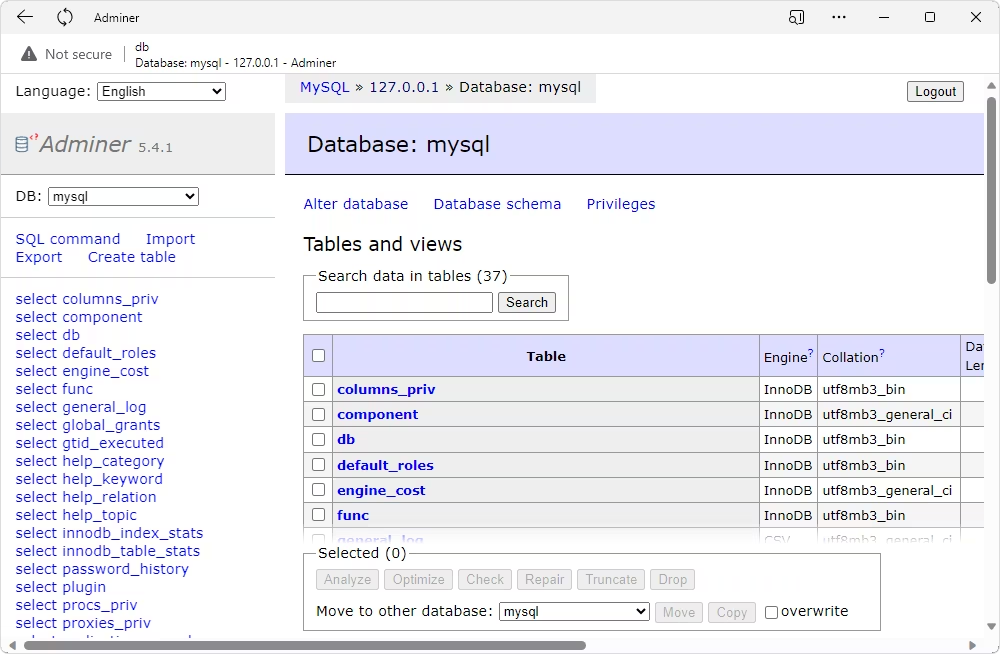
Adminer is a simple yet effective database management tool written in PHP. As opposed to its closest rival, phpMyAdmin, Adminer consists of a single file that is instantly ready for deployment to a target server. Adminer is available for multiple database systems, including SQL Server, MySQL, MariaDB, PostgreSQL, SQLite, and Oracle Database. Elasticsearch and MongoDB are supported via third-party plugins.
Pros and cons of Adminer
The advantages of Adminer are clear: it's free, open-source, lightweight, and offers a practical feature set. However, its limitations become apparent when your needs surpass its basic scope. Adminer lacks multifunctionality, advanced features, and an intuitive GUI for enjoyable daily use.
What is dbForge Edge?
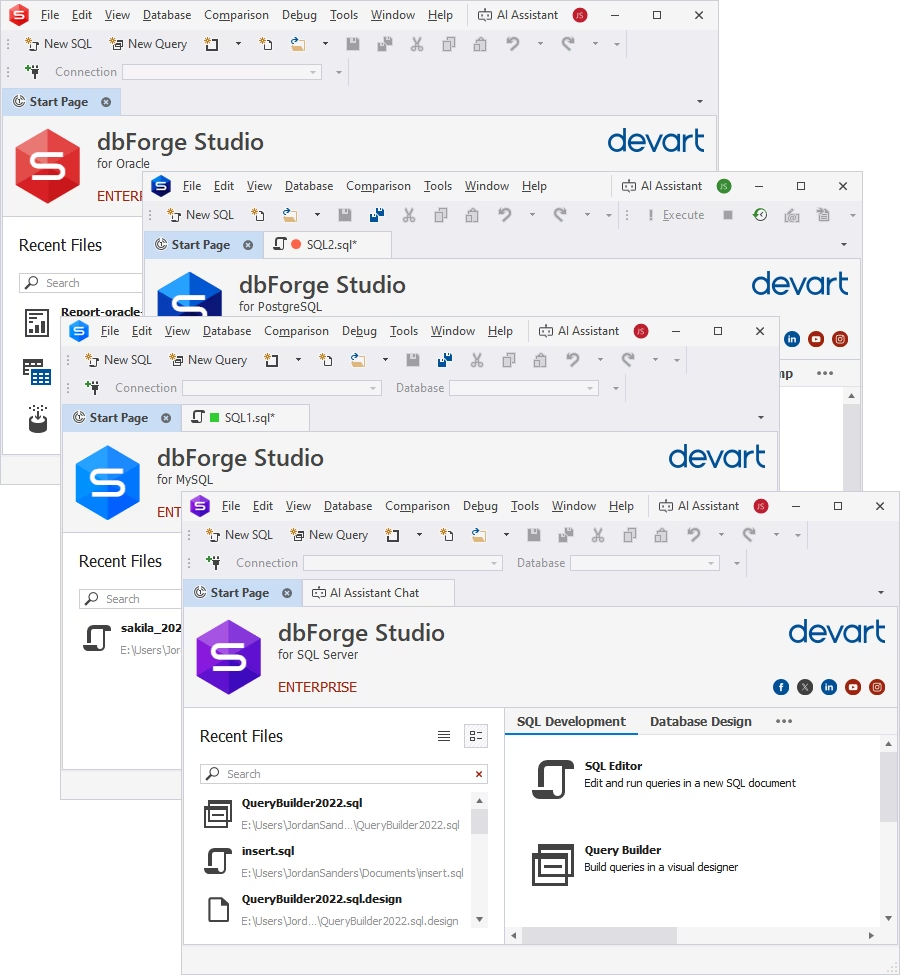
dbForge Edge is a multidatabase solution that consists of four all-in-one IDEs (called Studios) for the most popular database systems: SQL Server, MySQL/MariaDB, Oracle, and PostgreSQL, alongside a rich selection of cloud servers.
Beyond an extensive feature set, you gain access to a detailed documentation center, in-depth tutorials on the company blog and YouTube channel, and a responsive support team.
The benefits of dbForge Edge include the following:
- AI-powered assistance for SQL coding
- Secure connections to multiple database instances
- Context-aware code completion and instant syntax validation
- Code formatting, refactoring, and debugging
- Comparison and synchronization of database schemas and table data
- Flexible data management
- Visual query building on diagrams
- Test data generation
- Database administration and user management
- 30-day free trial (alternatively, you can get a free Express Edition with basic features)
Web-based and GUI-powered database management: Which one works best for you?
Adminer is a single-file app deployed to your server and accessed through your browser, while dbForge Edge is a suite of four GUI-based environments covering the most widely used database systems.
Here are the major differences between these models to help you decide which fits your needs.
When you should consider a web-based tool
- Your database management tasks are sporadic and/or repetitive.
- You only need querying and basic operations in multiple database systems.
When a GUI tool is a better solution
- You need quick access to features for diverse daily database operations and long-term strategies.
- You rely on visualization to improve your overall productivity.
However, these are general thoughts, not strict guidelines. Any case should be approached individually, with proper consideration of your particular needs and requirements.
Why teams choose dbForge Edge over Adminer
Adminer is lightweight, deploys quickly, and offers easy database access. Yet, as workflows grow complex, users often need advanced tools, like dbForge Edge. Adminer's simplicity becomes restrictive for ongoing professional use.
Limited UI depth for complex workflows
Adminer's minimal interface is well-suited for quick tasks like table browsing, record editing, or running SQL queries. Still, users often desire a richer workspace with more context and fewer repetitive actions.
Less comfort for frequent daily usage
Adminer excels at lightweight tasks. However, daily database work often requires rapid switching between databases, professional autocomplete, query history, customizable snippets, and stable session management—features that dbForge Edge provides.
Weak support for visual database design
A main reason users seek alternatives is for visual schema management. Adminer concentrates on direct database actions, but expanding projects typically require ER diagrams, relationship visualization, drag-and-drop schema design, dependency mapping, and documentation generation.
Limited database comparison and synchronization
Managing databases involves several environments—Development, Staging, Production, backups, and more. Comparison, synchronization, and difference review are vital tasks. dbForge Edge excels here, with advanced schema comparison, data sync, one-click automation, and detailed reports, outclassing Adminer.
Fewer capabilities for advanced SQL
As SQL tasks become intricate, users seek advanced productivity features. dbForge Edge includes intelligent autocomplete, formatting, debugging, refactoring, analysis, query profiling, and performance tuning. In contrast, Adminer's lightweight SQL editor favors speed but limits development capabilities.
Besides, modern workflows combine database management with broader development and administration tasks. dbForge Edge offers SSH access, Git integration, task automation, data import/export pipelines, and many other features. Therefore, users who move to larger projects and more collaborative environments choose software that ensures the required productivity depth.
Necessity for additional plugins
Adminer provides a lightweight and straightforward database management interface out of the box, but its default functionality is often insufficient for modern database professionals. Many advanced features can only be achieved through third-party plugins.
While this approach offers flexibility, it also introduces potential drawbacks. Plugin compatibility is not always guaranteed, and some extensions may conflict with one another. As a result, users may need to spend extra time testing and managing plugins to create a reliable and efficient working environment.
dbForge Edge
A unified cross-database IDE that empowers teams to design, develop, and manage multiple database systems from a single workspace.
Adminer vs dbForge Edge
dbForge Edge helps you manage a broad range of tasks, including database design, development, testing, administration, data analysis, and management. In contrast, Adminer focuses on executing SQL queries and managing multiple databases with a simpler, more streamlined approach, lacking the comprehensive feature set found in dbForge Edge.
Let's take a look at the key features of dbForge Edge that make it far superior to Adminer.
Integrated dbForge AI Assistant
dbForge AI Assistant is an AI-powered tool for generating, troubleshooting, and optimizing SQL queries, as well as getting AI-powered guidance on everything related to SQL and SQL coding.
dbForge AI Assistant is integrated into dbForge Edge and is well-versed in the specifics of the most popular database management systems, including SQL Server, MySQL/MariaDB, Oracle, PostgreSQL, Amazon Redshift, and related databases and cloud platforms.
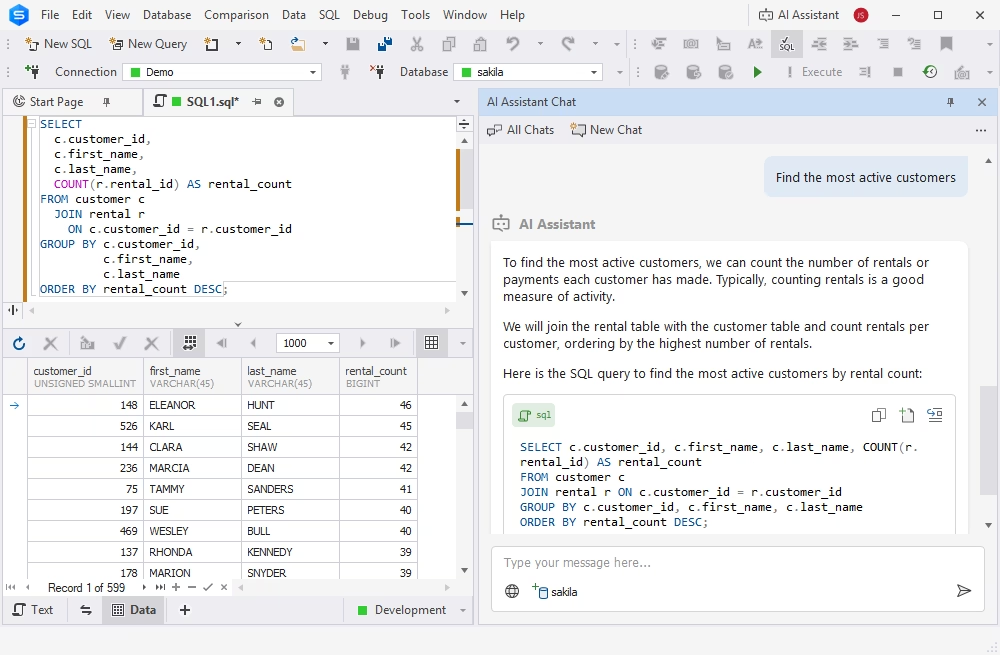
The following options are provided by dbForge AI Assistant:
- Context-aware query generation
- Conversion of natural language to SQL
- SQL explanations
- SQL troubleshooting
- Query optimization
- Real-time AI chat
dbForge AI Assistant
The most advanced copilot that instantly generates, explains, analyzes, optimizes, and troubleshoots SQL code, as well as consults you on everything related to SQL
SQL autocompletion, syntax validation, and code formatting
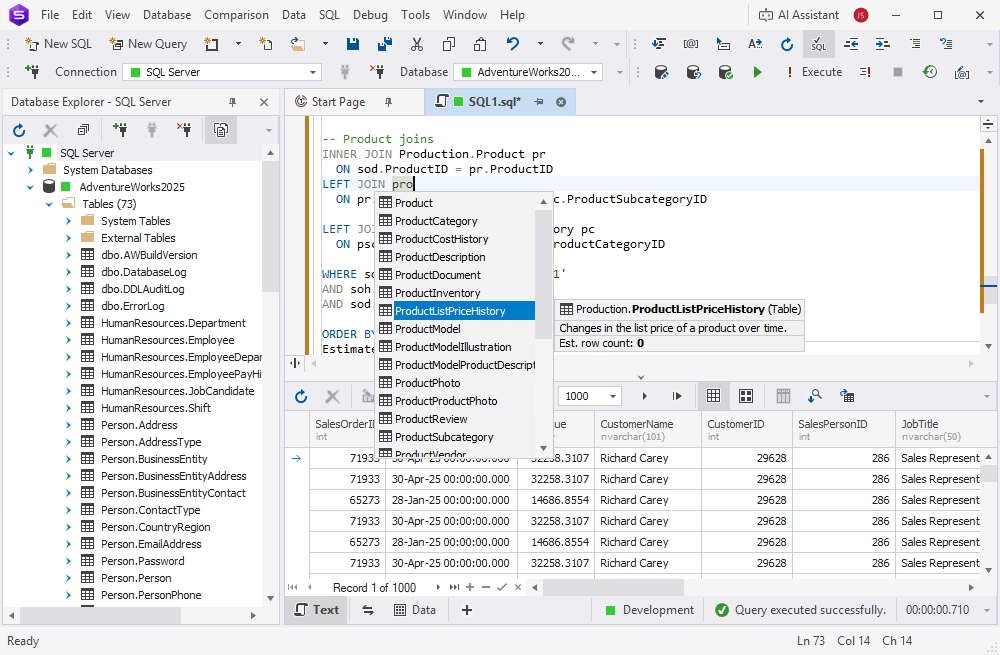
dbForge Edge delivers some of the most advanced SQL coding assistance options, including the following:
- Context-aware code completion
- Instant syntax validation
- Code snippets
- Rich formatting options with predefined and custom profiles
- Smart refactoring with auto-correction of references to renamed objects
- Debugging of stored procedures, functions, and triggers
Database comparison and synchronization
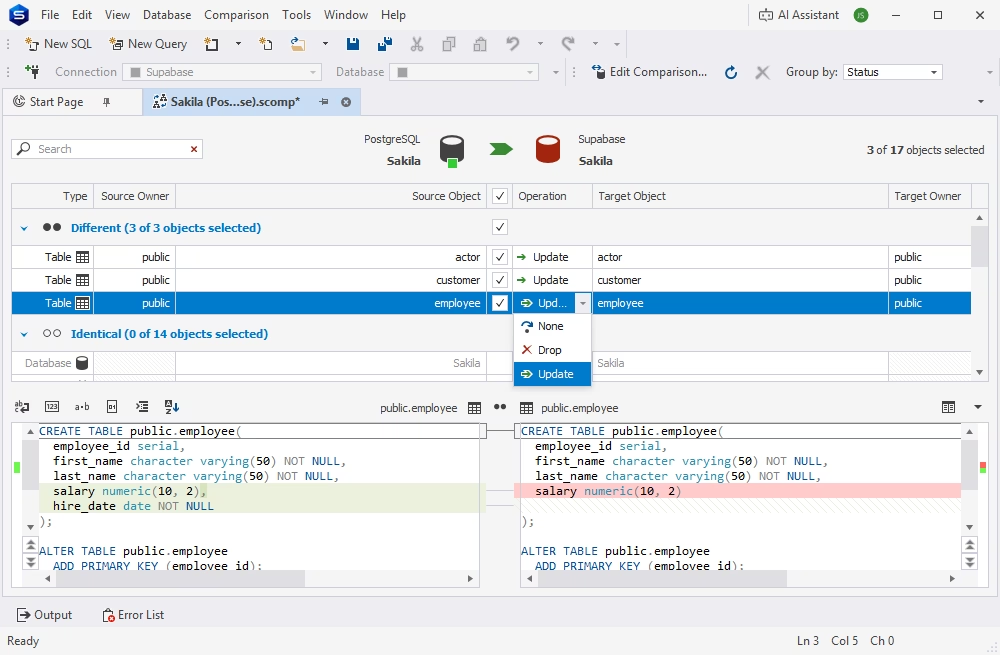
Effective database management is further facilitated by the built-in Schema Compare and Data Compare tools, which help you do the following:
- Locate and analyze differences in database schemas and table data
- View data differences per record
- Save and load comparison settings
- Generate data/schema synchronization scripts
- Generate detailed comparison reports in CSV, HTML, and Excel formats
- Automate comparison and synchronization tasks
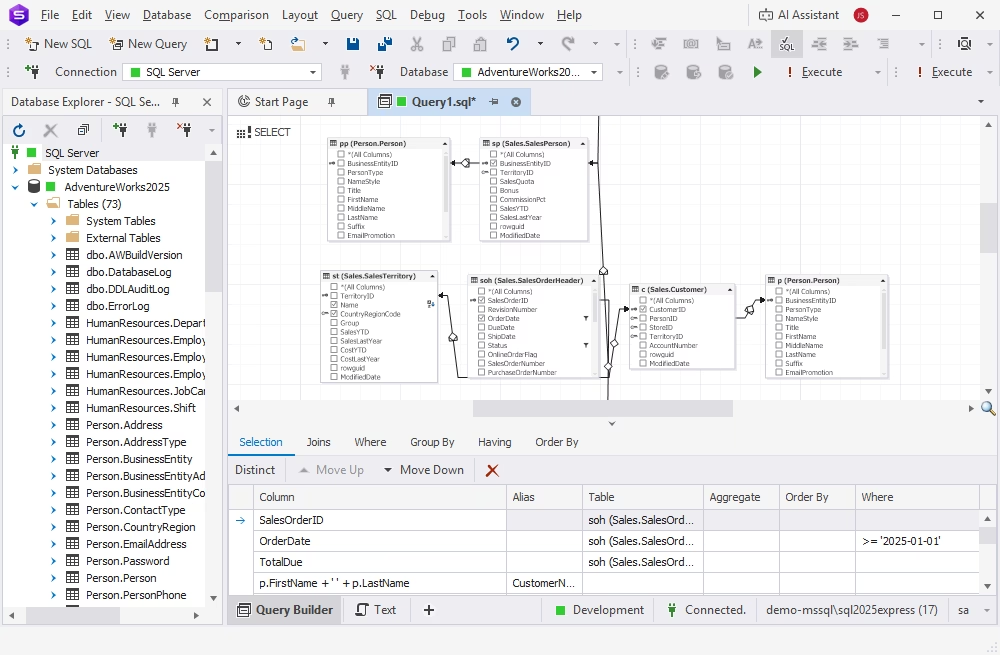
Visual Query Builder
One of the key features of dbForge Edge is Query Builder, a powerful, intuitive tool that helps you create queries of nearly any complexity on convenient visual diagrams. Thus, Query Builder eliminates the need for coding.
- Build queries in the fastest way possible
- Visualize complex queries
- Work with a variety of query types
- Work with subqueries
- Edit JOINs and WHERE conditions visually
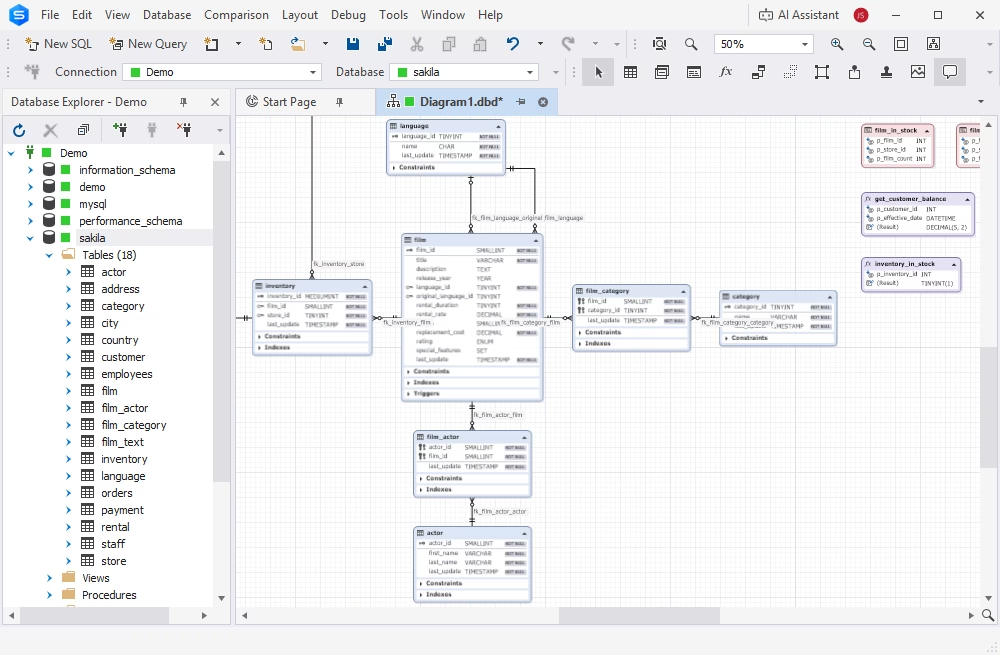
Database Designer
You can create entity-relationship diagrams to visualize database structures and logical relations between tables. What's more, you can edit database objects directly on the diagrams and group logically related objects using containers.
In addition, an integrated Table Designer delivers visual editors for columns, indexes, primary keys, foreign keys, check constraints, statistics, and table storage properties. You can also easily edit table data, preview ALTER TABLE scripts, and rebuild tables with no risk of losing data.
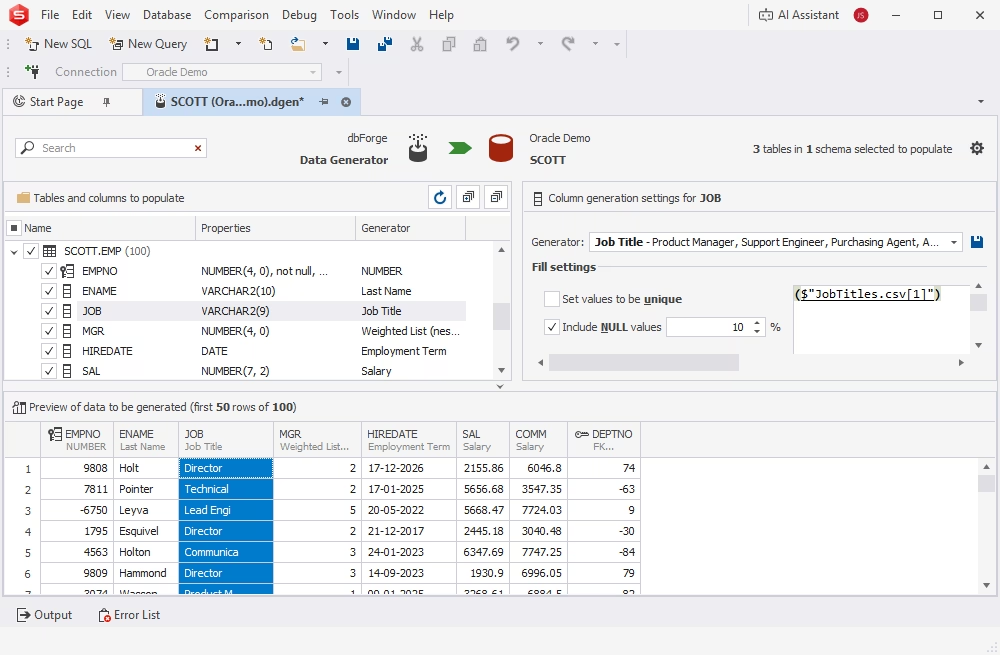
Generation of realistic test data
You can generate any volume of high-quality data for testing with over 200 predefined generators. Their flexible configuration options allow you to emulate column-intelligent, realistic data for populating your databases with.
Simplified data migration
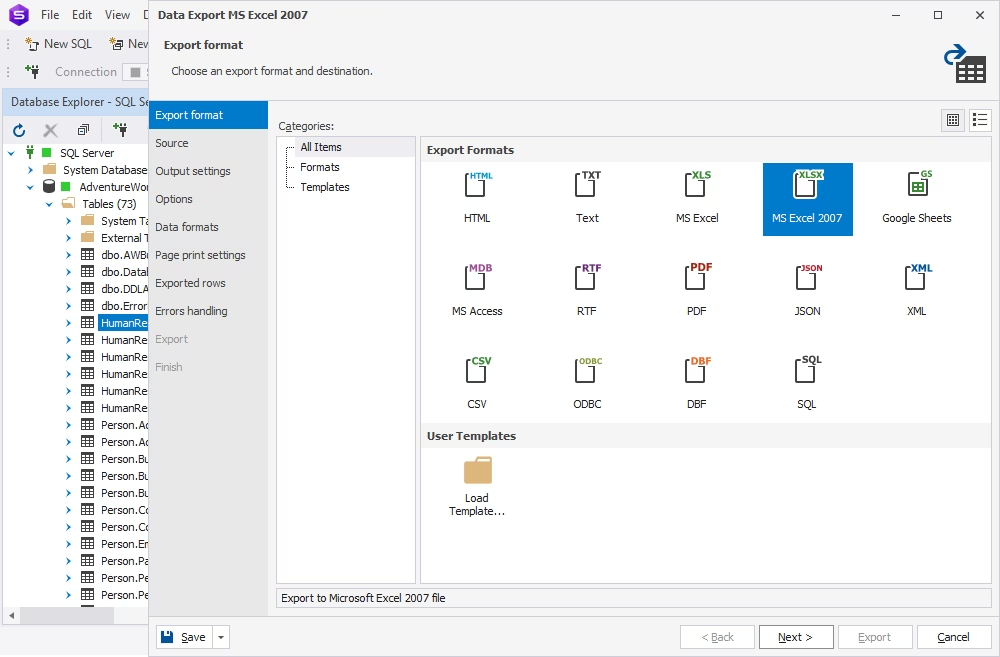
Data migration has never been easier. Besides the ability to duplicate entire databases and migrate them to different environments, you can swiftly import and export your data with a variety of formats: HTML, TXT, CSV, XLS, XLSX, Google Sheets, MDB, RTF, PDF, JSON, XML, ODBC, DBF, SQL.
The task configuration is simple and flexible, with a rich selection of settings, smart configuration wizards, and automation options at your service.
Which teams should choose dbForge Edge?
dbForge Edge is great for database tasks that require rich functionality and broad environment management capabilities. Let us consider scenarios in which implementing dbForge Edge can make a significant difference for SQL specialists in different roles.
SQL developers
For developers who work with complex queries every day, SQL Editor becomes critically important; developers often rely on IDEs that allow them to reduce repetitive work. Besides, development teams operate across multiple environments such as development, testing, staging, and production.
dbForge Edge provides an integrated dbForge AI Assistant with robust support for SQL development, a powerful SQL Editor with a set of coding assistance options, and advanced database schema and data comparison and synchronization tools. Besides, task automation allows developers to get rid of manual routine work.
Database engineers
Database engineers typically need to manage large architectures and handle schema design, migrations, scaling, replication, and infrastructure planning across multiple systems. These workflows require professional tools for visual modeling and advanced synchronization, and such tools are present in dbForge Edge.
Database administrators (DBAs)
Teams that manage large business-critical environments usually require speed, visibility, and operational safety. These qualities are far more essential for them than lightweight deployment. Professional DBA workflows also involve handling production incidents quickly. Here, dbForge Edge with its monitoring and visual management capabilities reduces risk and helps teams improve response time.
Data analysis and reporting teams
Data analysts often work with large datasets, exploratory queries, and reporting workflows that demand stronger usability and visualization. Here, dbForge Edge offers rich data visualization, analysis, and editing features as well as reporting features with charts and pivot tables.
Consultants handling multiple databases
Consultants and agencies that support many clients using different database technologies need tools that support multiple databases across different DBMSs. In this area, dbForge Edge provides a consistent cross-platform toolset and cloud database support for efficient task performance across different platforms.
Teams of database professionals who rely on visualization need efficient multi-database management and task automation functionality. Usually, they are present in modern IDEs with comprehensive toolsets for all required tasks from within a single platform. dbForge Edge is one of the most functional and user-friendly options for such teams in larger operational environments.
dbForge Edge
A unified cross-database IDE that empowers teams to design, develop, and manage multiple database systems from a single workspace.
FAQ
What is the best Adminer alternative for advanced database work?
For advanced database work, many professionals choose tools such as dbForge Edge, DBeaver, or Navicat because they offer significantly more functionality than Adminer. These solutions are better suited for complex SQL development, multi-database administration, schema comparison and synchronization, visual database design, and query optimization.
Among them, dbForge Edge is often considered one of the strongest replacements, especially for large-scale database environments. It combines support for all major databases with advanced database development, administration, visualization, and task automation.
Is dbForge Edge better than Adminer for SQL development?
dbForge Edge is a far more robust solution than Adminer, supporting every aspect of SQL development. It offers efficient code writing, visual design of complex queries, debugging of stored procedures, triggers, and functions, as well as schema change management and deployment.
In addition, the integrated dbForge AI Assistant significantly enhances SQL development. It automatically generates high-quality SQL code from plain-language requests and helps users explain, analyze, troubleshoot, and optimize SQL queries, making the processes faster and more efficient.
What is the difference between Adminer and DBeaver?
Adminer is a lightweight, web-based database administration tool focused on simplicity and quick access. It consists of a single PHP file with a minimal interface and offers a relatively limited feature set compared to advanced database IDEs.
DBeaver, by contrast, is a full-featured desktop database IDE designed for developers, analysts, DBAs, and database engineers working in complex or enterprise-level environments. It provides extensive functionality for professional, long-term database development and administration workflows.
Which Adminer alternative is best for PostgreSQL or SQL Server?
For PostgreSQL, some of the strongest Adminer alternatives are dbForge Studio for PostgreSQL (one of the most feature-rich PostgreSQL IDEs) and pgAdmin, which is widely used for native PostgreSQL development and administration.
For Microsoft SQL Server, the standard IDE is SQL Server Management Studio (SSMS), which is developed and maintained by Microsoft. Another strong option is dbForge Studio for SQL Server, which offers more advanced functionality than SSMS.
dbForge Edge supports both PostgreSQL and SQL Server, providing comprehensive functionality for SQL development, administration, database comparison, synchronization, data analysis, and reporting.
DBAs often prefer native tools such as pgAdmin or SSMS, while SQL developers and database teams that require advanced visualization, database comparison, synchronization, administration, and reporting capabilities frequently choose solutions like dbForge Edge, DBeaver Pro, or Navicat.
Can I use dbForge Edge instead of Adminer for database migration and comparison tasks?
Absolutely. dbForge Edge is much more powerful than Adminer for database migration and comparison tasks. It includes dedicated Schema Compare and Data Compare tools for SQL Server, MySQL/MariaDB, Oracle, PostgreSQL, and related cloud and on-premises platforms.
These tools allow users to compare databases with high precision, down to individual objects or table rows, detect and analyze differences, and deploy changes to target environments efficiently. This makes dbForge Edge highly effective for database migration and synchronization workflows.
In addition, dbForge Edge includes built-in data migration tools that simplify data import and export operations, making database transfer and management faster and more convenient.


