PostgreSQL Database Explorer
Managing database connections
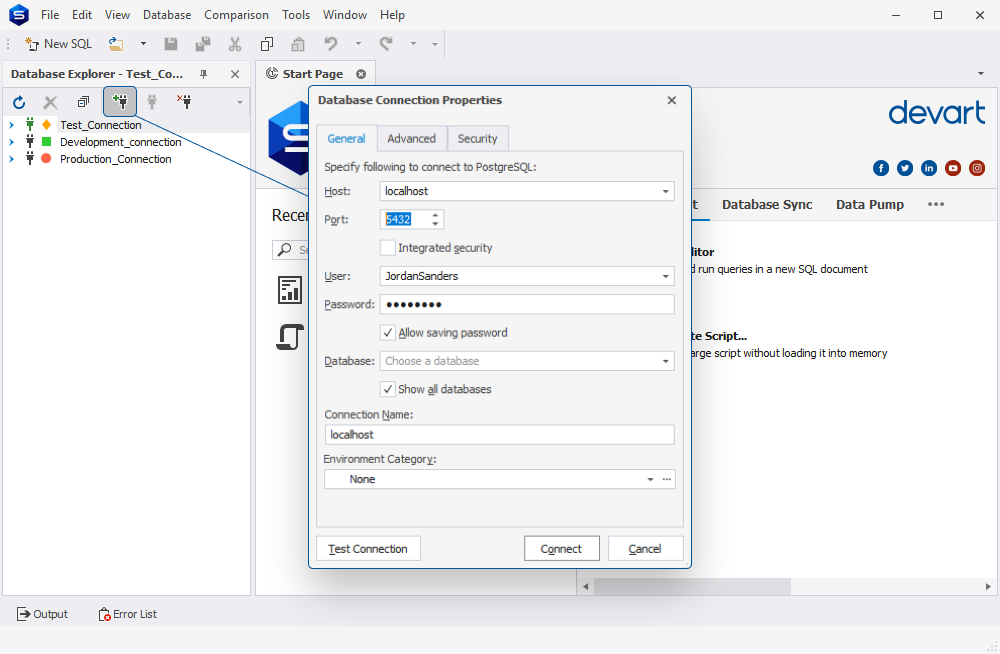
dbForge Studio for PostgreSQL offers a quick and simple way to manage database connections through Database Explorer, which allows adding, editing, deleting,
renaming, or duplicating existing database connections in just a few clicks. Postgres Database Explorer is designed to simplify the work with a bunch of database connections.
You can call the Database Connection Properties window right from its upper pane. You can also close a connection with a single click.
Viewing database schema information
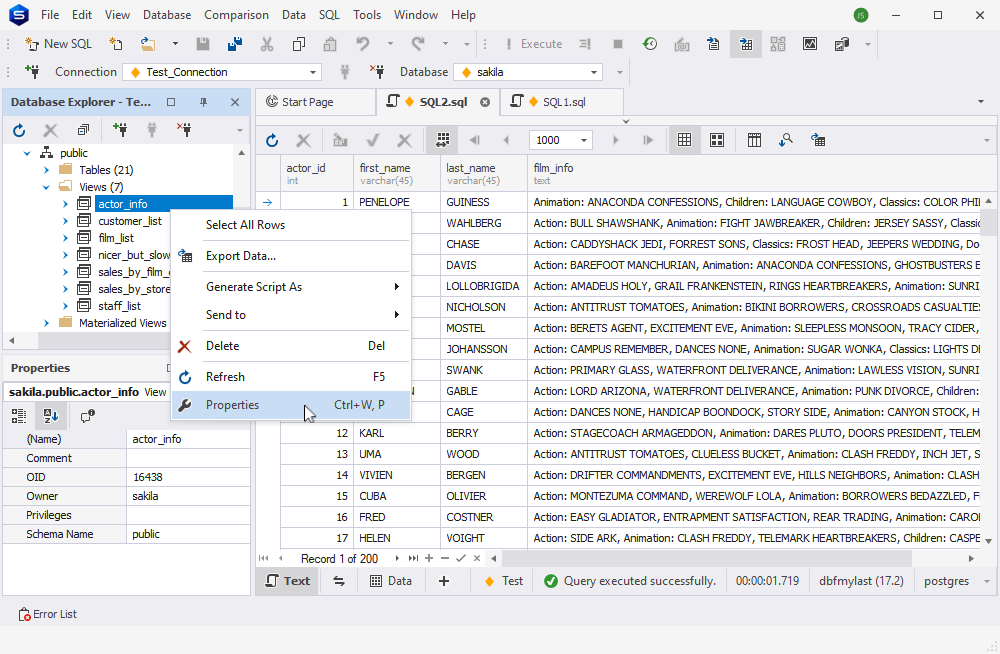
You can instantly check database schema information for tables, views, procedures, functions, triggers, and events right from Database Explorer.
Just right-click the object you are interested in and select Properties from the context menu that appears.
Displaying the number of database objects
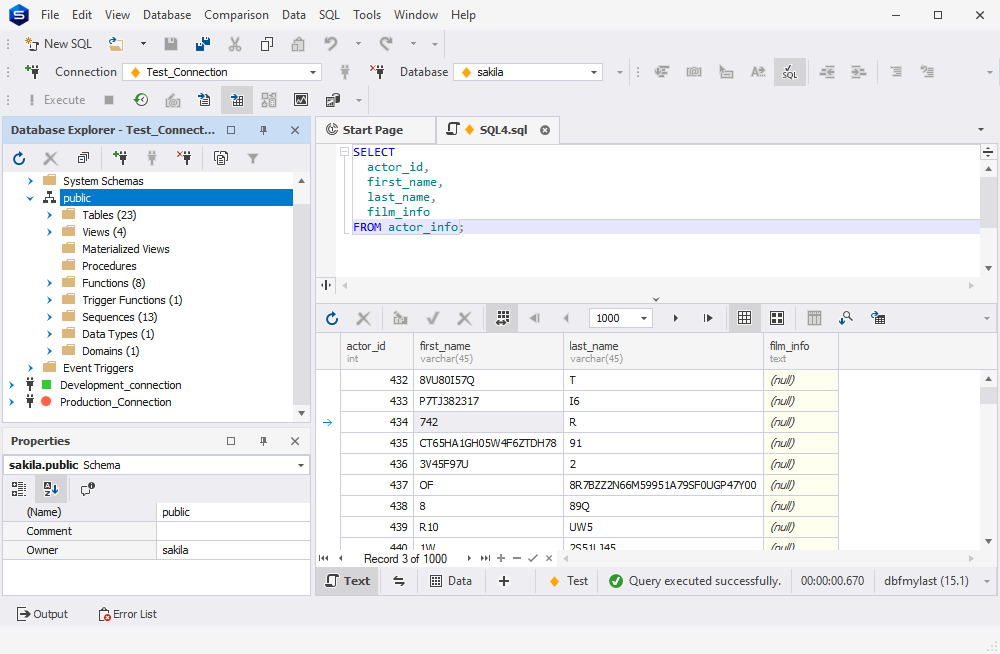
Database Explorer displays the number of existing database objects.
It is displayed in parentheses to the right of the folder name.
Filtering database objects
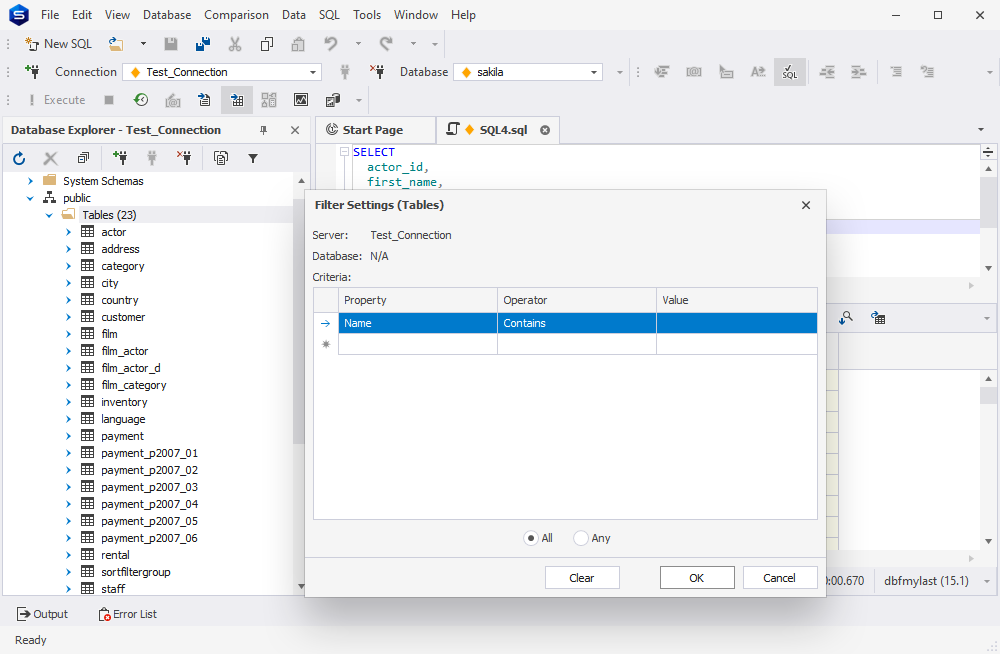
Filtering simplifies navigation through databases that contain a large number of objects.
You can use filters to display fewer objects in the Postgres Database Explorer tree and work only with the objects you need. To apply filters, right-click the folder with
objects and select the Filter option from the context menu that appears.
Generating DDL statements for database objects
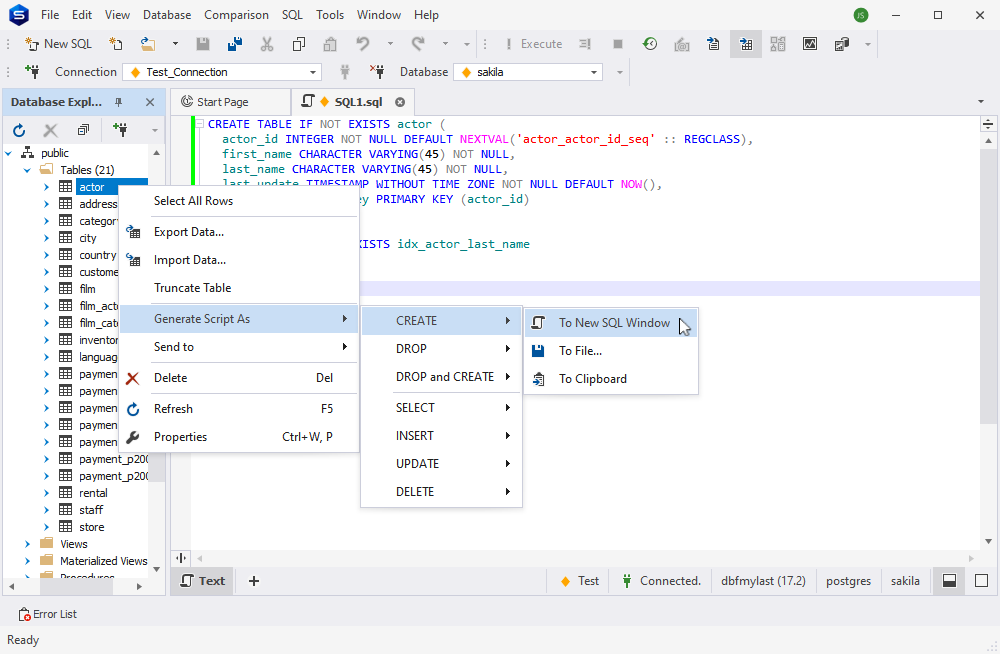
dbForge Studio for PostgreSQL allows generating DDL statements for tables, views, stored procedures, functions, and triggers. Using the feature, you can generate scripts to
recreate the necessary database objects when and where required. In the Postgres Explorer, right-click the object you want to create a DDL statement for, and select Generate Script As from the context menu.